


The kitchen is often called the heart of the home. It is where we brew our morning coffee, prepare nourishing meals, and gather for late-night chats. However, for many of us as we get older, the kitchen can also become one of the most hazardous rooms in the house. Between the hard tile floors, occasional spills, and high cabinets, it is a space that demands our respect and a proactive approach to safety.
At the Fall Prevention Foundation, we believe that staying safe shouldn’t mean giving up the activities you love. You should be able to bake your famous cookies or cook a Sunday roast without the constant fear of a slip or trip. By understanding the specific risks present in the kitchen and making a few strategic adjustments, you can maintain your independence and continue enjoying your culinary space with confidence.
In this comprehensive guide, we will walk you through the essential strategies for preventing elderly falls at home, specifically tailored to the unique challenges of the kitchen environment.
1. Mastering Your Kitchen Flooring
Flooring is arguably the most critical factor in kitchen safety. Most kitchens feature hard, smooth surfaces like tile, linoleum, or hardwood. While these are easy to clean, they are also incredibly unforgiving and become remarkably slick when wet.
Remove or Secure Rugs
Small area rugs and decorative doormats are among the biggest fall hazards in any home. It is incredibly easy for a walker or a toe to catch on the edge of a rug, leading to a stumble. The safest choice is to remove rugs entirely. If you feel you must have a mat in front of the sink for comfort, ensure it has a high-quality non-slip backing or is secured with heavy-duty carpet tape.
Skip the Floor Wax
A shiny, waxed floor might look beautiful, but it is a recipe for disaster. Polished surfaces significantly reduce traction, even when you are wearing proper footwear. Avoid using floor waxes or high-gloss cleaners. Instead, look for matte-finish cleaners that maintain the integrity of the floor without adding a slippery film.
Immediate Spill Response
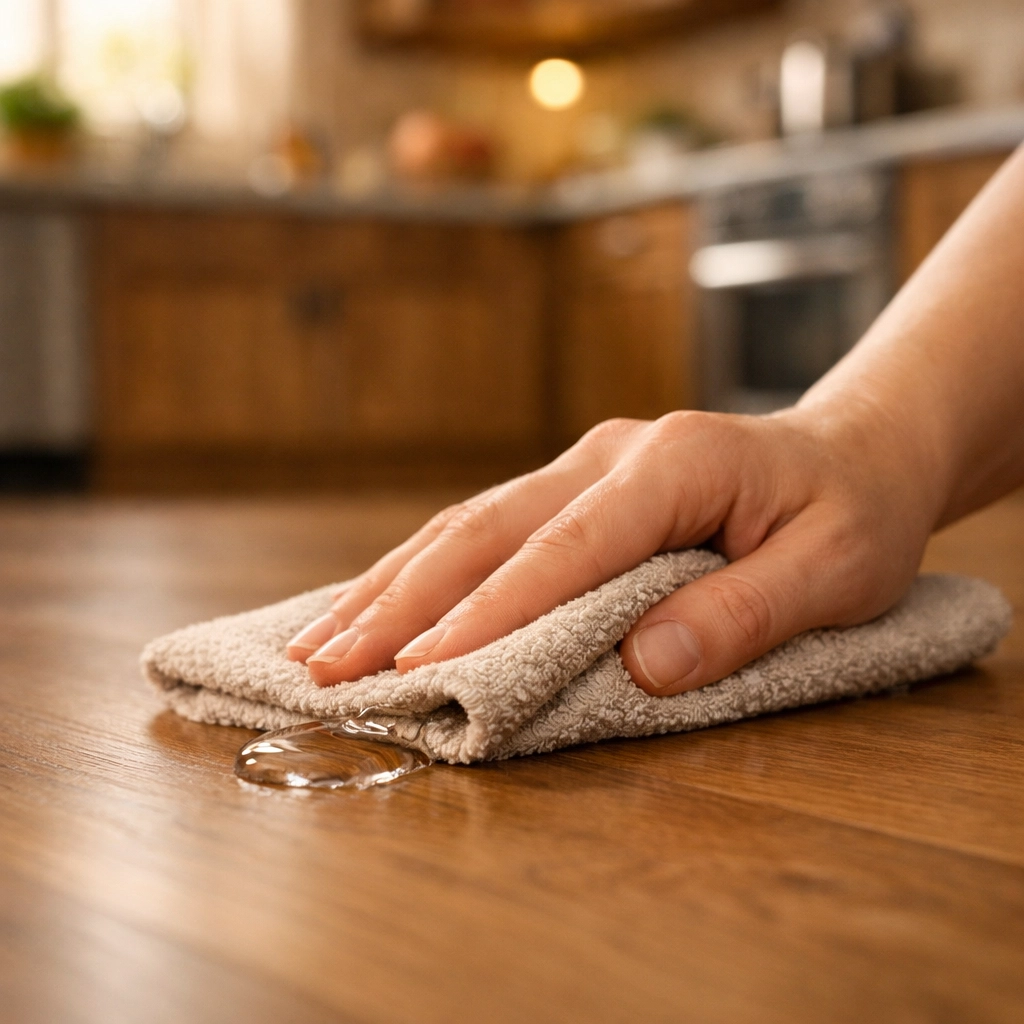
In the kitchen, spills are inevitable. Whether it’s a splash of water from the sink or a drop of cooking oil, any liquid on a hard floor is a high-risk zone. Make it a habit to clean up spills the second they happen. Don't just wipe away the liquid; ensure the area is completely dry. Sticky residue from juice or soda can be just as dangerous as water because it can cause your shoe to "catch," throwing off your balance.
2. Shedding Light on the Subject
Visual clarity is your first line of defense against falls. As we age, our eyes often require more light to distinguish between different levels, shadows, and objects. A dimly lit kitchen makes it difficult to see a clear path or notice a small spill on the floor.
Upgrade Your Bulbs
Ensure that every corner of your kitchen is well-lit. Replace old, dim bulbs with bright LED options. LEDs provide a crisp, clear light that helps reduce shadows. Pay special attention to "task lighting": the areas where you do the most work, such as the stove and the sink.
Nightlights and Motion Sensors
If you find yourself wandering into the kitchen for a glass of water at night, you shouldn't have to fumble for a light switch in the dark. Install plug-in motion-sensor nightlights along the baseboards. These provide enough light to see the floor and obstacles without the glare of overhead lights, which can sometimes be disorienting when you first wake up.
3. Smart Storage and Organization
How you organize your kitchen can determine how much physical strain you put on your body. Constant reaching, stretching, and climbing are major contributors to loss of balance.
The "Comfort Zone" Rule
Store your most frequently used items: like your favorite skillet, everyday plates, and common ingredients: at waist or counter level. Heavy appliances like mixers or slow cookers should live on the counter permanently if you use them often. This eliminates the need to bend deep into low cabinets or reach high above your head, both of which can cause dizziness or instability.
Ditch the Step Stool
Step stools are a common cause of falls in the kitchen because they require standing on a small, elevated surface without a handrail. If you have items stored in high cabinets that you rarely use, ask a family member or friend to move them down for you. If you absolutely must use a stool, choose a sturdy model with a high handrail and wide, non-slip steps. Never use a dining chair or a folding chair as a substitute for a ladder.
Use a Reacher
For light items that are just out of reach, a long-handled "reacher" or "grabber" tool is a fantastic investment. These allow you to retrieve items from shelves without needing to stand on your tiptoes or use a stool.

4. Adjusting Your Daily Habits
Safety isn't just about the physical environment; it's also about how you move within it. Small changes to your routine can significantly lower your risk.
Prepare Food While Seated
Standing for long periods while chopping vegetables or prepping a meal can lead to fatigue. When we are tired, our muscles are less responsive, and our balance suffers. Consider pulling a sturdy chair or a tall stool up to the counter so you can sit while you work. This preserves your energy and keeps your center of gravity stable.
The Clear Path Policy
Keep your walkways clear of clutter. This means making sure pet bowls are tucked away in a corner, trash cans are out of the main traffic flow, and no grocery bags are left on the floor. If you have a pet, putting a small bell on their collar can help you hear them underfoot, preventing a trip over a furry friend.
Proper Lifting
When you do need to move something heavy, like a pot of water, remember to use proper mechanics. Bend at your knees, not your waist, and keep the object close to your body. If a pot is too heavy to carry safely, consider filling it with a smaller pitcher once it’s already on the stove.
5. Footwear: Your Foundation for Stability
What you wear on your feet is just as important as the floor you are walking on. While it is tempting to walk around the house in socks or loose slippers, these offer almost zero traction and no ankle support.
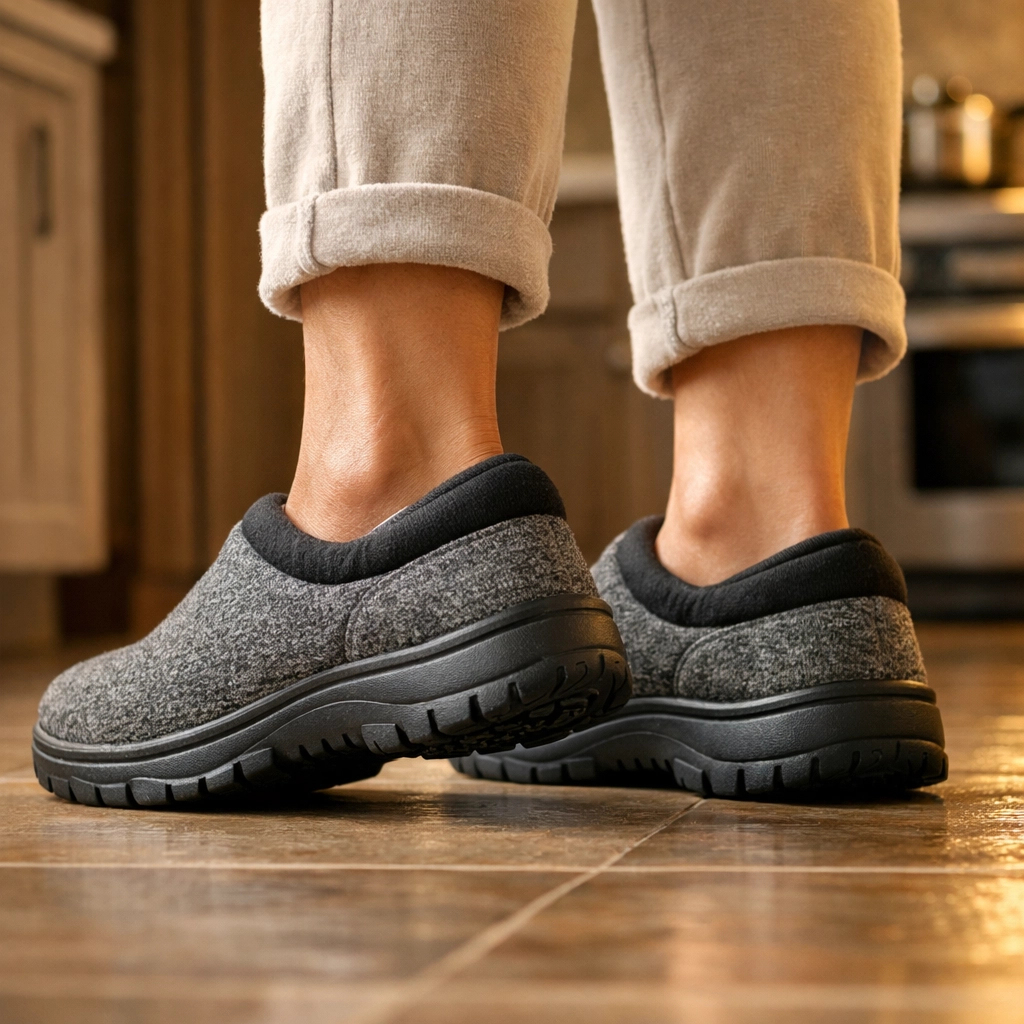
To stay safe in the kitchen, you should wear closed-toe, closed-back shoes with non-slip rubber soles. Many people find that having a dedicated pair of "indoor-only" supportive shoes helps keep their kitchen floors clean while providing the grip they need. For a deeper dive into why this matters, you can read our guide on shoes to prevent falls in the elderly.
If you prefer a lighter feel, ensure you are using high-quality non-slip footwear designed specifically for stability and grip on hard surfaces.
6. Strategic Kitchen Modifications
If you are looking to make more permanent changes, there are several modifications that can make your kitchen a fortress of safety.
Install Grab Bars
We often think of grab bars as something only for the bathroom, but they can be incredibly helpful in the kitchen too. Placing a discrete grab bar near the sink or the stove can provide a steadying point if you feel a moment of weakness or dizziness.
Lever-Handled Faucets
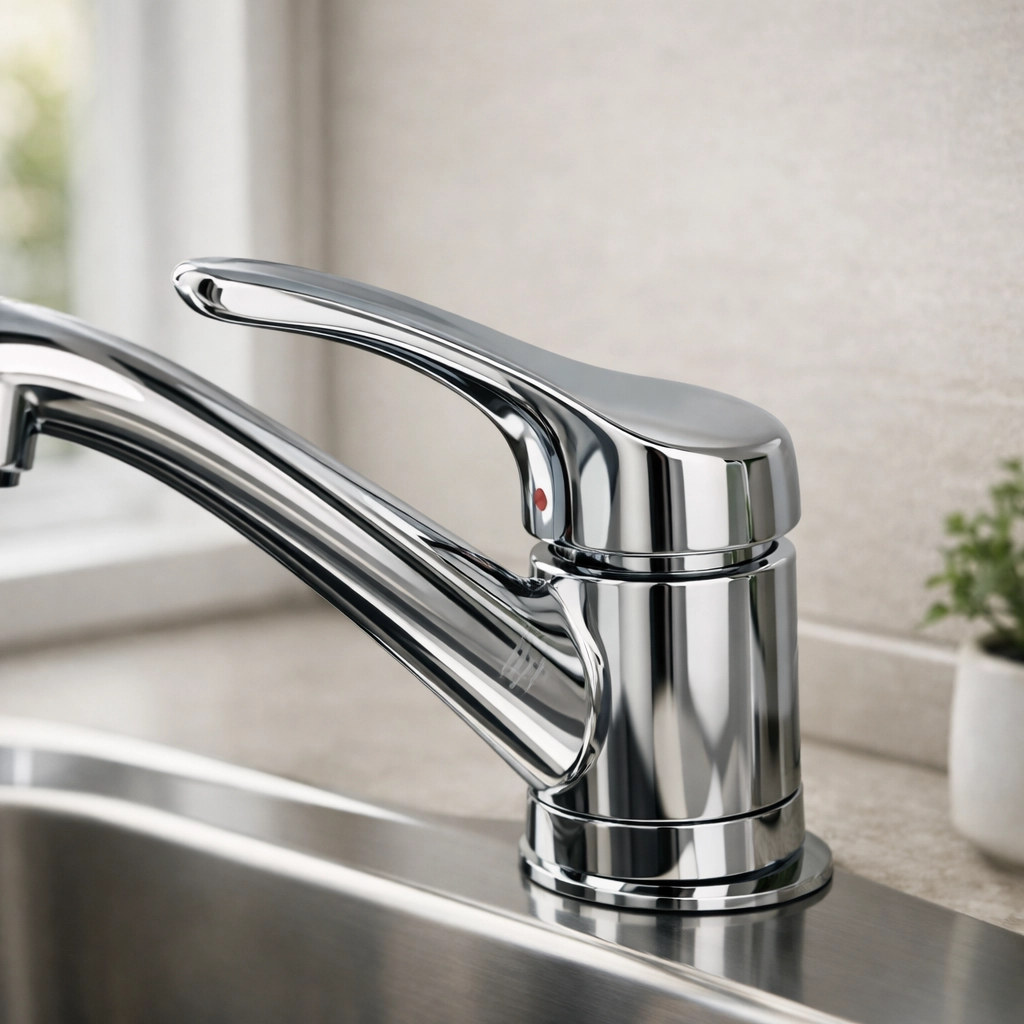
If you have arthritis or limited grip strength, twisting traditional faucet knobs can be difficult. Replacing them with lever-handled faucets makes it much easier to turn the water on and off quickly, which is especially important if you need to wash your hands fast after handling something slippery.
Stove Safety
When cooking, always turn pot handles toward the back of the stove. This prevents you from accidentally bumping into them and knocking hot contents onto yourself or the floor. Also, avoid wearing loose, flowy sleeves while cooking, as these can catch on handles or, worse, ignite on a burner.
Staying Independent and Empowered
Every year, thousands of older adults experience falls that could have been prevented with simple, practical steps. By taking the time to audit your kitchen: checking the lighting, securing the floors, and organizing your cupboards: you are taking control of your safety.
It is also a great idea to consult with a professional, such as an occupational therapist. They can perform a home safety assessment and provide personalized recommendations based on your specific needs and mobility level. They might suggest specific ways to prevent falls in the elderly that are unique to your home's layout.
Preventing falls isn't about living in fear; it's about preparation. When you know your environment is safe, you can move with more confidence. You can focus on the joy of cooking, the smell of a fresh meal, and the comfort of your home, knowing you’ve done everything possible to keep yourself steady and strong.
Stay safe, keep cooking, and enjoy your kitchen on your own terms. Your independence is worth every small adjustment you make today.
✔ Reviewed by Steve Kerr, PT
Steve Kerr, PT is the founder of Fall Prevention Foundation and a licensed physical therapist with more than 30 years of experience helping older adults improve mobility, reduce fall risks, and remain safely independent at home.
Our educational articles are reviewed for accuracy and are intended to support older adults, caregivers, families, and healthcare professionals.
Learn more about Steve Kerr and the Fall Prevention Foundation →

