


Hi there! I’m Brian Kerr, the founder of the Fall Prevention Foundation. If you’ve ever felt a little unsteady on your feet or worried about a loved one slipping in the bathroom, you’re in the right place. In the world of healthcare, we often talk about "fall precautions" as if it’s a complex medical term, but at its heart, it’s really about one thing: keeping you safe and independent in the home you love.
Every year, millions of older adults, one out of every four, in fact, experience a fall. While that statistic might sound a bit scary, the good news is that falls are not an inevitable part of aging. Most falls can be prevented with a few simple strategies and a little bit of "nurse-approved" knowledge. Think of this as your beginner’s guide to mastering home safety, written with the same care and practical advice a visiting nurse would give you right in your living room.
Why Fall Prevention Matters More Than You Think
When a nurse walks into a patient's home, the first thing they do is a "quick scan." They aren't just looking at the decor; they are looking for hazards. Why? Because a single fall can change everything. It can lead to broken bones, hospital stays, and a loss of confidence that keeps you from doing the things you enjoy.
Fortunately, by staying informed and taking proactive steps, you can significantly reduce your risk. We want to move from a state of worry to a state of empowerment. You have the power to make your home a sanctuary of safety.
Step 1: Identifying Your Personal Risk Factors
Before we start moving furniture, we need to look at the personal factors that might make you more prone to a stumble. Nurses call this a "risk assessment." Here are a few questions to ask yourself:
- Have you fallen in the past year? A history of falls is one of the strongest predictors of a future fall.
- Do you feel dizzy or lightheaded when you stand up? This could be related to blood pressure or medication.
- Are you taking four or more medications? Some combinations can cause drowsiness or blurred vision.
- Is your vision a bit blurry lately? Poor depth perception makes it hard to see changes in floor height.
If you answered "yes" to any of these, don't panic. It just means you need to be a bit more diligent. We highly recommend you consult with your primary care provider to discuss these risks, especially regarding medication management and vision checks.

Step 2: The Home Safety Audit (Room-by-Room)
A nurse's "teaching" always includes a thorough look at the environment. You can do this yourself or with a family member. Let’s break down the most important areas of your home.
The Living Room and Hallways
These are the high-traffic areas where "clutter creep" happens.
- Clear the Path: Remove stacks of magazines, shoes, and pet toys from walkways.
- The Rug Problem: Throw rugs are the number one enemy of stability. They bunch up or slide easily. If you can’t live without them, use double-sided tape or non-slip backing to secure them firmly to the floor.
- Cord Control: Ensure electrical cords are tucked behind furniture and not stretched across the floor.
The Bathroom: The Highest Risk Zone
More falls happen in the bathroom than anywhere else because of wet, slippery surfaces.
- Install Grab Bars: These should be professionally installed near the toilet and inside the shower. Never use a towel rack for balance: they aren't designed to hold your weight.
- Non-Slip Mats: Use high-quality non-slip mats both inside and outside the tub. For more detailed advice, check out our guide on bathroom non-slip flooring.
- Raised Toilet Seats: If it’s getting harder to stand up from a low position, a raised seat can make a huge difference.
The Bedroom
- Night Lights: Install motion-sensor night lights that guide your path from the bed to the bathroom.
- Phone Access: Keep a phone (or a medical alert button) on your bedside table so you can call for help without getting out of bed in the dark.
Step 3: Mastering Your Movement
Nurses teach specific techniques to help you move safely, especially when transitioning from one position to another. These "nurse tips" can save you from a dizzy spell:
- The "Dangle" Technique: Before getting out of bed, sit on the edge with your feet hanging down for 30 to 60 seconds. This allows your blood pressure to stabilize.
- Ankle Pumps: While sitting, flex your feet up and down 10 times. This gets the blood flowing back toward your heart.
- The Two-Hand Rule: When standing up from a chair, use both hands to push off the armrests rather than pulling on a walker or a table.
- Pause and Scan: Once standing, wait a moment to ensure you feel steady before taking your first step.
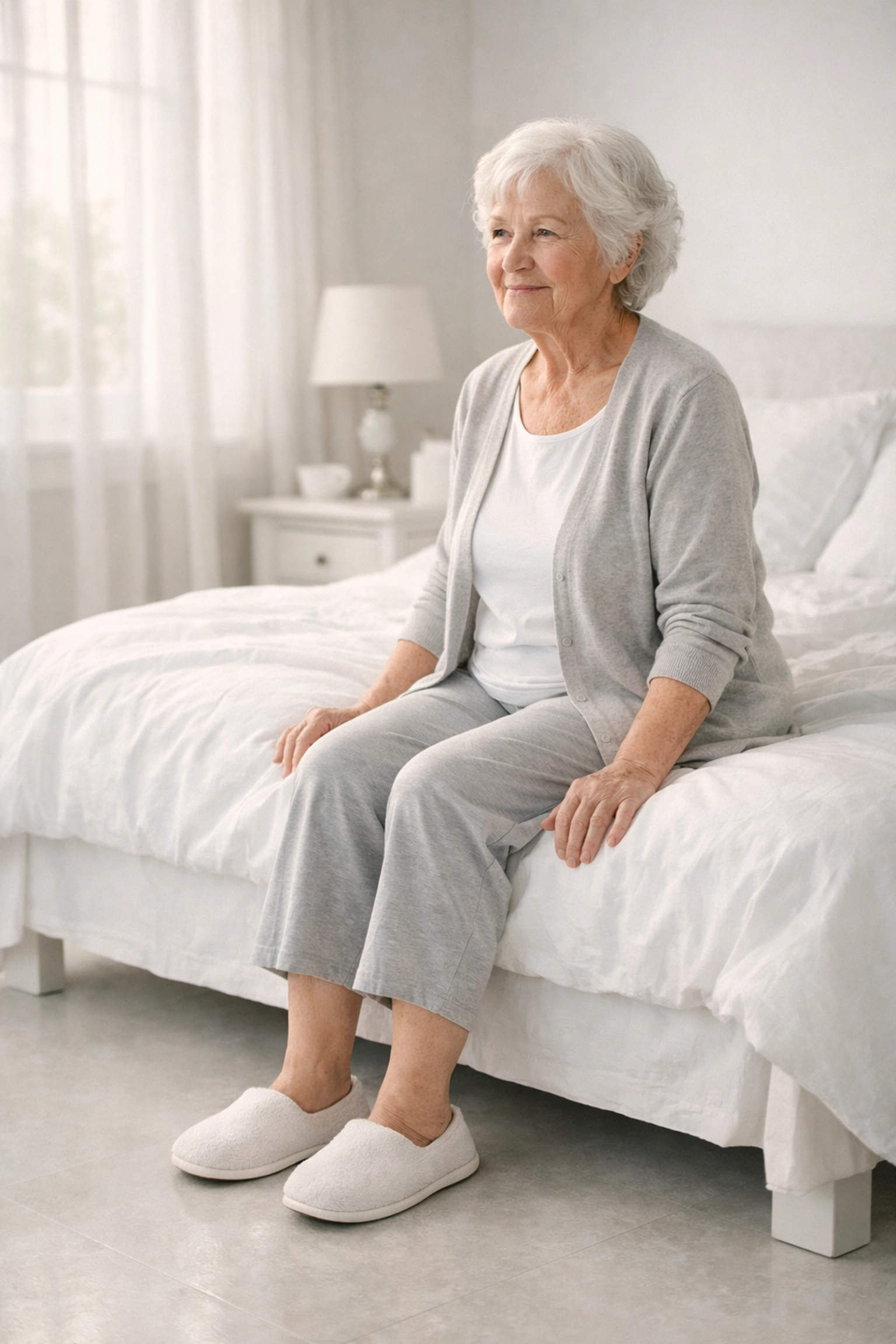
Step 4: Choosing the Right "Equipment"
Your personal "gear" plays a massive role in safety. A nurse will almost always check your shoes the moment they meet you.
Footwear is Foundation
Walking barefoot, in socks, or in loose-fitting slippers is a major risk. You need shoes that provide support and grip.
- The Sole Matters: Look for thin, non-slip soles that allow you to "feel" the ground while providing traction.
- The Fit: Ensure the shoe is snug and has a back: no "flip-flops" or backless clogs.
- Socks: If you must walk in socks, only use those with rubberized grips on the bottom. You can find more about the best non-slip socks here.
- Expert Advice: For a deep dive into picking the right pair, read our personal guide to shoes to prevent falls.
Assistive Devices
If a healthcare professional suggests a cane or a walker, embrace it! It’s not a sign of weakness; it’s a tool for freedom.
- Correct Height: Ensure your device is fitted to your height. Your elbow should have a slight 15-degree bend when holding the handle.
- Maintenance: Check the rubber tips on your cane or walker monthly. If they are worn down or smooth, they won't grip the floor and need to be replaced.
Step 5: Building Strength and Balance
You can't talk about fall precautions without talking about the "engine": your body. Improving your physical stability is one of the most effective ways to prevent falls in the elderly.
- Leg Strength: Strong thighs and calves help you stand up and stay up.
- Balance Training: Activities like Tai Chi or simple heel-to-toe walking can sharpen your coordination.
- Consistency: You don't need a 2-hour gym session. We have a great resource on 10-minute balance exercises that you can do right in your kitchen.
Note: Always ask your doctor before starting a new exercise routine to ensure it’s safe for your specific health needs.

Step 6: Medication and Health Management
This is where the "medical" part of fall precautions comes in. Many medications: including those for blood pressure, sleep, or anxiety: can affect your balance.
- Review Your Meds: At least once a year, bring all your pill bottles (including vitamins and supplements) to your doctor or pharmacist for a "brown bag" review. Ask them, "Could any of these be making me dizzy or increasing my risk of falling?"
- Vision and Hearing: If you can’t see a hazard or hear a warning, you’re at higher risk. Ensure you have annual eye and ear exams.
- Hydration: Dehydration can lead to confusion and dizziness. Keep a water bottle nearby and sip throughout the day.
What to Do If a Fall Happens
Even with the best precautions, accidents can occur. Knowing how to react can prevent further injury.
- Don't Rush Up: If you fall, stay still for a minute. Catch your breath and check for pain or injury.
- The Crawl Method: If you aren't hurt, try to crawl to a sturdy piece of furniture (like a couch or heavy chair).
- The Kneel and Rise: Put your hands on the seat of the chair, bring one knee up, then the other, and slowly pivot yourself into the seat.
- Call for Help: If you can’t get up, stay as warm as possible and use your phone or alert device.
Final Thoughts: Living on Your Own Terms
Mastering home safety isn't about living in fear; it's about preparation. By following these nurse-recommended strategies: clearing your paths, wearing the right shoes, and building your strength: you are taking control of your future.
Independence is a precious thing. With a few small changes and a commitment to staying active, you can continue to enjoy your home, your hobbies, and your life with confidence and peace of mind. For more practical tips on keeping your space safe, feel free to explore our guide on preventing elderly falls at home.
Stay steady, stay safe, and remember that we are here to support you every step of the way!
✔ Reviewed by Steve Kerr, PT
Steve Kerr, PT is the founder of Fall Prevention Foundation and a licensed physical therapist with more than 30 years of experience helping older adults improve mobility, reduce fall risks, and remain safely independent at home.
Our educational articles are reviewed for accuracy and are intended to support older adults, caregivers, families, and healthcare professionals.
Learn more about Steve Kerr and the Fall Prevention Foundation →

