


Every year, one in four adults over 65 experiences a fall, and nearly one-third of these incidents happen right at home. The culprit? Often, it's something as seemingly innocent as a decorative rug shifting underfoot at the wrong moment.
If you've been searching for the best non-slip rugs to protect yourself or a loved one, you've likely discovered a confusing maze of products making bold safety claims. Some rugs promise "non-slip" performance but slide across the floor the moment you step on them. Others create trip hazards with thick, raised edges that catch on walkers and shuffle steps.
This guide cuts through the marketing noise to show you exactly what works, and what doesn't, when it comes to choosing rugs that genuinely protect against falls.
Why Traditional Rugs Create More Problems Than They Solve
That beautiful Persian rug in your entryway might look elegant, but it could be a fall waiting to happen. Traditional rugs fail seniors in three critical ways:
They shift and slide. Most decorative rugs have minimal backing or thin latex coatings that lose grip over time. Every step on an unstable rug forces your body to make micro-adjustments to stay balanced, exhausting work that becomes dangerous when reaction times slow.
They create trip edges. Thick pile rugs with raised borders turn every entry and exit into an obstacle course. Seniors who shuffle their feet rather than lifting them high are especially vulnerable to catching a toe on these edges.
They become slippery when cleaned. Many rugs develop a slick surface after washing, especially when detergent residue builds up in the fibers. The very act of maintaining the rug makes it more dangerous.
The solution isn't to remove all rugs from your home, it's to choose ones specifically engineered for safety.

The 5 Non-Negotiable Features of Safe Non-Slip Rugs
When evaluating rugs for fall prevention, focus on these essential characteristics:
1. Professional-Grade Rubber Backing
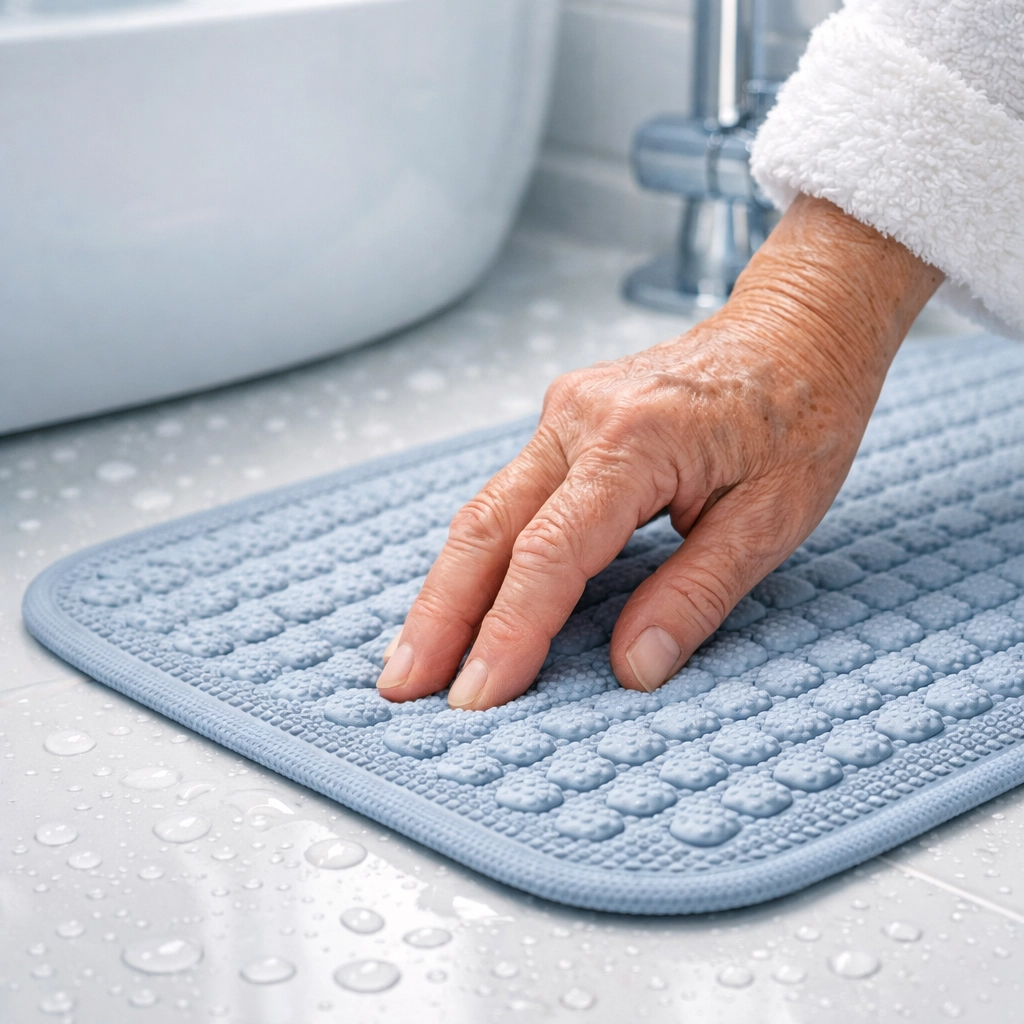
The backing is everything. Look for full-coverage rubber or high-quality TPR (thermoplastic rubber) that extends to every edge of the rug. This material should maintain its grip even after repeated washing and across different floor types.
Avoid rugs with:
- Dotted or partial latex backing
- Thin coatings that peel or crack
- PVC materials that can interact negatively with certain floor finishes
2. Low-Profile Construction
Your rug should measure approximately 1/4 inch thick or less. This low profile minimizes the height difference between the floor and rug surface, reducing the chance of tripping. Pair this with beveled or tapered edges that create smooth transitions rather than abrupt drop-offs.
3. High Coefficient of Friction
In technical terms, look for rugs with a coefficient of friction of 0.6 or higher, the standard referenced for pedestrian safety. In practical terms, this means textured surfaces that maintain grip even when slightly damp from wet shoes or cleaning.
4. Reinforced Borders
Edge curling and corner lifting turn safe rugs into trip hazards. Quality non-slip rugs feature reinforced borders that resist rippling and stay flat, even in high-traffic areas or when furniture sits partially on top.
5. Appropriate Size for Your Space
Here's a counterintuitive truth: a rug that's too small can be more dangerous than no rug at all. Choose sizes that allow your typical stride to land fully on the rug rather than half-on, half-off the edge where instability occurs. In high-traffic areas, bigger is genuinely safer.

Room-by-Room Non-Slip Rug Strategy
Different rooms in your home have different fall risk profiles. Here's how to address each one:
Living Room and Family Areas
Choose a large area rug that extends at least 18 inches beyond the front legs of your sofa or chairs. This creates a stable platform for those critical sit-to-stand transitions when you're most vulnerable to losing your balance.
Anchor the rug by placing furniture legs directly on it, the weight adds stability and prevents shifting during everyday movement. Opt for subtle, low-contrast patterns that reduce visual confusion and improve your spatial awareness as you move around the room.
Kitchen and Dining Areas
Kitchens see frequent spills and require rugs that maintain traction when wet. Position non-slip runners at the sink, stove, and any food prep areas where you stand for extended periods. The cushioning these rugs provide also reduces fatigue and strain on your joints during cooking sessions.
Avoid placing rugs directly in traffic pathways where people frequently pivot and turn, these high-movement zones are better served by the main flooring's consistent surface.
Bathrooms
This room deserves special attention since wet surfaces and bare feet create the perfect storm for falls. Use non-slip mats both inside and directly outside the shower or tub. Wash these mats at least once weekly to maintain their effectiveness, as soap residue and body oils reduce their grip over time.

Bedrooms
Place a non-slip rug on the side of the bed where you typically get up during the night. Middle-of-the-night bathroom trips are among the most common times for falls, when you're disoriented and your muscles are cold. The rug should be large enough that you won't step off its edge before you're fully awake and stable.
Installation: The Other Half of the Safety Equation
Even the best non-slip rug won't protect you if it's installed incorrectly. Follow these professional installation practices:
Always use a rug pad. High-quality felt and natural rubber pads provide an additional layer of grip and cushioning. Size the pad to match your rug dimensions exactly, pads that extend beyond the rug create new trip hazards.
Test before committing. Place your rug in its intended location and test the backing's grip on your specific floor type when both dry and slightly damp. Walk across it in different directions and at different speeds. Have someone attempt to shift the rug while you stand on it.
Check floor compatibility. Some rubber or PVC backings can interact negatively with certain floor finishes, particularly on hardwood or luxury vinyl. Test a small area first, or consult the flooring manufacturer's recommendations.
Secure high-risk areas. For rugs in critical safety zones like bathroom entrances, consider double-sided carpet tape as an additional anchor. This extra security is worth the minor installation effort.
Beyond Rugs: Building a Comprehensive Floor Safety System
While choosing the right rugs is crucial, the most effective fall prevention approach considers your entire floor surface. The flooring underneath your rugs plays an equally important role in your safety.
Rubber flooring offers consistent traction even when damp and provides shock absorption that can lessen impact forces if a fall does occur. It's available as interlocking tiles or rolls for smooth, low-edge installations throughout your home.
Cork flooring features a natural honeycomb-like structure that cushions under impact while providing inherent grip. As a bonus, cork contributes to room warmth and comfort, particularly appreciated if you spend time at home barefoot.
Luxury vinyl plank (LVP) with cushioned backing balances safety with aesthetics, especially when you choose versions with textured wear layers that enhance traction. The cushioned backing provides moderate impact protection while maintaining the look of natural wood.
For particularly high-risk individuals, specialized anti-fall flooring systems are available that are engineered to reduce hip-impact energy during falls. Independent laboratory testing has shown meaningful reductions in hip and femur fracture risk compared to ordinary hard flooring.
Maintenance: Keeping Your Non-Slip Rugs Effective
A rug's safety features deteriorate without proper care. Implement this maintenance routine:
Weekly: Vacuum thoroughly to remove dirt and debris that reduce traction. Shake out smaller rugs outdoors to dislodge embedded particles.
Monthly: Spot-clean any spills or stains immediately using minimal detergent. Excess soap creates slippery residue that compromises grip.
Quarterly: Deep clean according to manufacturer instructions, ensuring all cleaning solutions are completely rinsed out. Allow rugs to dry fully, ideally in sunlight, before reinstalling.
Annually: Inspect rubber backing for signs of deterioration such as cracking, peeling, or loss of tackiness. Replace rugs showing these wear patterns before they fail at a critical moment.
Making Your Final Selection
When you're ready to purchase, prioritize function over fashion. Yes, you want your home to look attractive, but no decorative choice is worth sacrificing your independence or safety.
Start by measuring your spaces carefully and creating a list of specific locations where rugs would improve both comfort and safety. Consider your daily routines: where do you stand most often? Which pathways do you travel multiple times daily? These high-use areas deserve your attention first.
If you use mobility aids like walkers or canes, test potential rugs with your devices before purchasing. What feels secure underfoot might interact differently with wheels or rubber tips.
For personalized recommendations that consider your specific health conditions and home layout, consult with an occupational therapist. These professionals can assess your individual fall risk factors and suggest modifications tailored to your needs.
Your Foundation for Safer Living
Falls don't have to be an inevitable part of aging. By choosing non-slip rugs with professional-grade backing, low profiles, and appropriate sizing for each room in your home, you're building a foundation for continued independence and confidence.
Remember: every fall you prevent is one less setback in your health journey. The right rugs, properly installed and maintained, let you move freely through your home without fear: allowing you to focus on living life on your own terms rather than constantly worrying about the next step.
For more strategies to maintain your independence and reduce fall risks, explore our other resources at Fall Prevention Foundation, including proven balance exercises you can do in just 10 minutes daily.
✔ Reviewed by Steve Kerr, PT
Steve Kerr, PT is the founder of Fall Prevention Foundation and a licensed physical therapist with more than 30 years of experience helping older adults improve mobility, reduce fall risks, and remain safely independent at home.
Our educational articles are reviewed for accuracy and are intended to support older adults, caregivers, families, and healthcare professionals.
Learn more about Steve Kerr and the Fall Prevention Foundation →
