


The kitchen is where we nourish ourselves and our loved ones: but it's also one of the most dangerous rooms in your home. In fact, thousands of people suffer fall-related injuries in kitchens every year, often from hazards that seem minor until it's too late. The good news? Most kitchen falls are completely preventable once you know what mistakes to avoid.
Let's walk through the seven most common kitchen fall hazards that might be hiding in plain sight: and exactly how to fix them today.
Mistake #1: Using Throw Rugs Without Non-Slip Backing
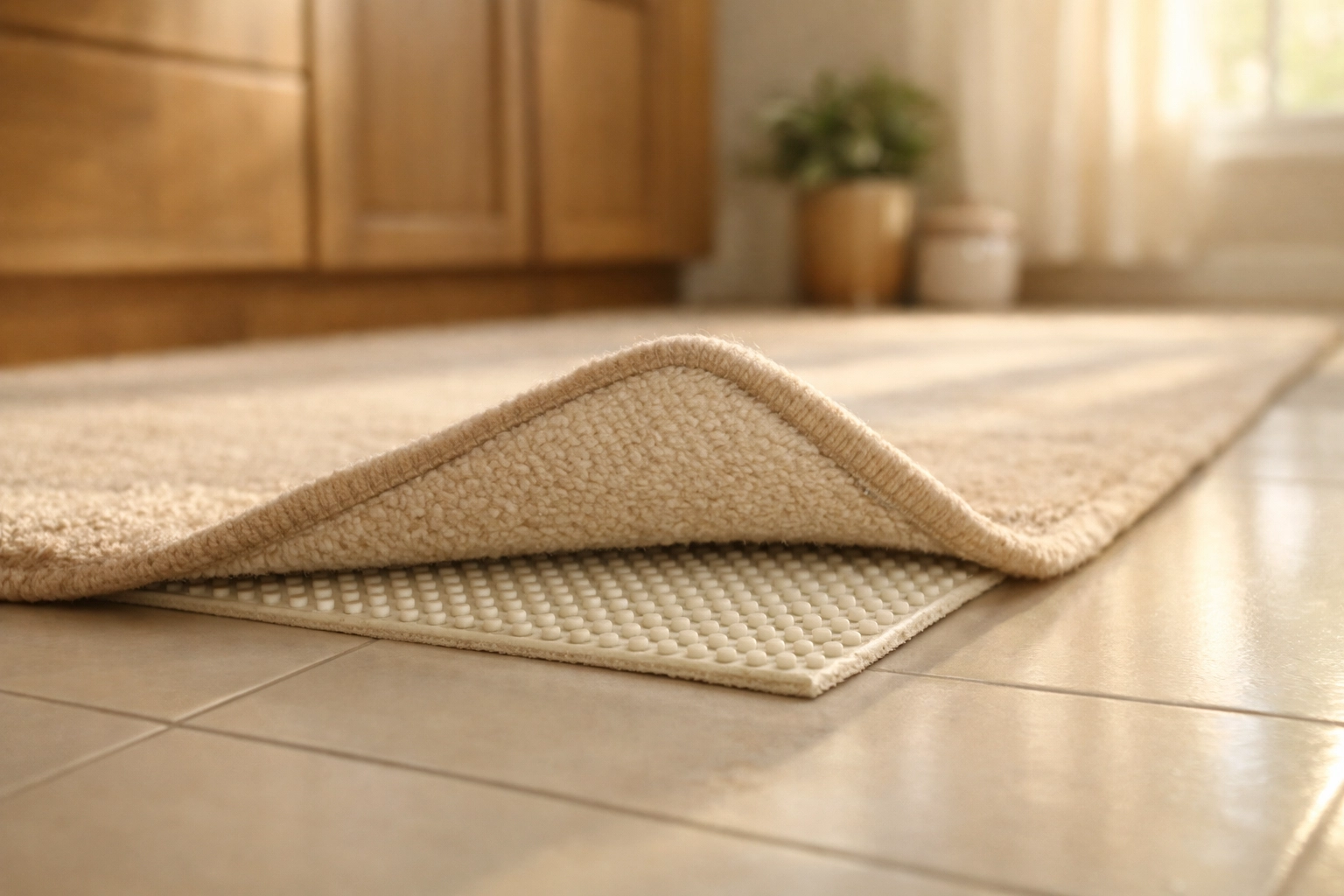
That decorative kitchen rug might add a pop of color to your space, but if it slides even slightly when you step on it, it's a fall waiting to happen. Small area rugs and runners consistently rank among the top fall hazards in homes, especially on smooth surfaces like tile, linoleum, or hardwood.
How to Fix It:
The safest solution is to remove throw rugs entirely from your kitchen. If you prefer to keep one for comfort or style, take these precautions:
- Apply rubber-backed gripper pads underneath every rug
- Use heavy-duty carpet tape around all edges
- Choose only rugs with built-in rubber backing
- Eliminate any rugs with fringes or curled edges
- Replace rugs immediately if they start to bunch or slide
Remember, even a rug that "usually stays put" can shift at the wrong moment. Your safety is worth more than any decorative accent.
Mistake #2: Waxing Your Kitchen Floors
Shiny, freshly waxed floors might look beautiful, but that glossy finish creates a dangerously slippery surface: especially when combined with common kitchen moisture. High-gloss polish and traditional floor wax transform your kitchen into a skating rink, particularly in areas near the sink or stove where water and grease accumulate.
How to Fix It:
- Stop using floor wax or high-gloss finishes in your kitchen
- Switch to matte or satin-finish floor treatments designed for safety
- Choose slip-resistant floor cleaners specifically formulated for kitchens
- If you have tile floors, consider textured or non-slip tile options
- Apply anti-slip coating products to existing slippery surfaces
Your floors can still look clean and well-maintained without the dangerous shine. Opt for products that prioritize traction over appearance.
Mistake #3: Delaying Cleanup of Spills
"I'll get to it later" is one of the most dangerous phrases in kitchen safety. Whether it's water from washing vegetables, cooking oil splatters, or even dried sticky spots, every unaddressed spill is a potential fall hazard. Liquids create obvious slip risks, but even dried residue can catch your foot or cause your shoe to stick and release suddenly.
How to Fix It:
Adopt a zero-tolerance policy for kitchen spills:
- Keep paper towels or cleaning cloths within arm's reach at all times
- Clean spills the moment they happen: no exceptions
- Place absorbent mats near the sink to catch drips and splashes
- Sweep or vacuum regularly to remove crumbs and debris
- Check for dried spills during your daily kitchen routine
Make immediate cleanup a non-negotiable habit. The 30 seconds it takes to wipe up a spill could prevent a life-changing fall.

Mistake #4: Standing While Cooking
Standing for extended periods while preparing meals can lead to fatigue, muscle strain, and decreased balance: all of which increase your fall risk. Many people don't realize that sitting while cooking is not only acceptable but actively safer, especially during tasks that require focus and dexterity.
How to Fix It:
Transform your cooking routine by incorporating seated preparation:
- Use a sturdy, stable chair at a comfortable height for your countertop
- Sit while chopping vegetables, stirring pots, or assembling ingredients
- Position frequently used items within easy reach before you start cooking
- Take regular seated breaks during longer cooking sessions
- Consider a kitchen stool with back support for optimal comfort
You don't need to stand the entire time you're cooking. Give your legs a rest and reduce your fall risk simultaneously.
Mistake #5: Wearing Inappropriate Footwear
Walking around your kitchen in socks, bare feet, or flimsy slippers is one of the easiest mistakes to make: and one of the easiest to fix. Smooth flooring surfaces combined with inadequate footwear create a perfect storm for slips and falls, particularly on tile, linoleum, or wood.
How to Fix It:
Choose kitchen-appropriate footwear every single time:
- Wear shoes or slippers with skid-resistant rubber soles
- Look for footwear with closed heels and proper arch support
- Avoid socks, stockings, or barefoot walking on smooth floors
- Replace worn footwear when treads become smooth
- Keep a dedicated pair of non-slip house shoes near the kitchen entrance
Proper footwear provides traction, stability, and protection. Make it a rule: no cooking without proper shoes.

Mistake #6: Storing Frequently Used Items Out of Reach
Reaching for dishes, glasses, or ingredients stored on high shelves forces you to stretch, strain, and often resort to unsafe makeshift solutions like standing on chairs or countertops. Every time you overreach or climb on unstable furniture, you risk a serious fall.
How to Fix It:
Reorganize your kitchen with safety as the priority:
- Move everyday dishes, glasses, and utensils to waist-to-shoulder height cabinets
- Store heavy items on lower shelves to prevent both reaching and heavy lifting risks
- Keep cooking oils, spices, and frequently used ingredients within easy reach
- Use a sturdy step stool with handrails for items you rarely need
- Consider installing pull-down shelving systems in upper cabinets
- Never stand on chairs, boxes, or countertops to reach high items
Take an afternoon to rearrange your kitchen storage. The convenience and safety benefits will last for years.
Mistake #7: Poor Lighting
Inadequate lighting ranks among the most overlooked kitchen safety issues. Dim or shadowy areas make it difficult to see spills, obstacles, or changes in floor elevation. Poor lighting also strains your eyes, leading to fatigue that further compromises your balance and coordination.
How to Fix It:
Brighten your kitchen strategically:
- Install bright, focused task lighting above all work areas
- Add under-cabinet lighting to illuminate countertops and floors
- Ensure overhead lighting provides even coverage throughout the kitchen
- Use LED bulbs for bright, energy-efficient illumination
- Install motion-sensor lights if you often enter the kitchen at night
- Mark any steps or elevation changes with high-contrast tape
- Replace burned-out bulbs immediately: no exceptions
Good lighting helps you spot hazards before they cause falls. Invest in proper illumination throughout your kitchen.

Additional Kitchen Safety Tips
Beyond these seven major mistakes, consider these supplementary safety measures:
- Keep cabinet doors and drawers closed when not in use to prevent collision injuries
- Maintain clear, clutter-free walkways throughout your kitchen
- Secure loose electrical cords against walls or under furniture
- Install non-slip strips on any steps leading into or out of the kitchen
- Consider adding grab bars near the sink if balance is a concern
Creating Your Safer Kitchen
Falls don't happen because you're careless: they happen because common household setups contain hidden hazards that accumulate over time. By addressing these seven mistakes, you're taking proactive control of your safety and independence.
Start with one or two changes today. Remove those throw rugs. Clean up that spill. Reorganize one cabinet. Each small improvement adds up to a significantly safer cooking environment.
If you have concerns about your specific fall risk factors, balance issues, or home safety modifications, consult with your healthcare provider or a certified occupational therapist. They can provide personalized recommendations tailored to your needs.
Your kitchen should be a place of nourishment and comfort: not anxiety about falling. With these strategic changes, you can cook with confidence and maintain your independence in the heart of your home.
✔ Reviewed by Steve Kerr, PT
Steve Kerr, PT is the founder of Fall Prevention Foundation and a licensed physical therapist with more than 30 years of experience helping older adults improve mobility, reduce fall risks, and remain safely independent at home.
Our educational articles are reviewed for accuracy and are intended to support older adults, caregivers, families, and healthcare professionals.
Learn more about Steve Kerr and the Fall Prevention Foundation →

