


Here's a sobering fact: one in four adults over 65 experiences a fall each year, and roughly one-third of these falls happen right at home due to environmental hazards. But here's the good news: you have the power to dramatically reduce this risk by choosing the right non-slip products for your living space.
Non-slip rugs, mats, and specialized flooring aren't just nice-to-have accessories. They're your first line of defense against potentially life-changing injuries. These products improve traction, absorb impact, and stabilize your movement throughout your home. Let's walk through everything you need to know to make informed decisions about fall-safe surfaces.
What Makes a Surface Fall-Safe?
Before you start shopping, you need to understand what separates genuinely protective products from marketing hype. Here are the critical features that actually matter:
Slip resistance is paramount. Look for products with a high coefficient of friction: ideally 0.6 or higher for pedestrian safety. Textured finishes that maintain grip even when slightly wet offer the best protection in real-world conditions.
Impact absorption can mean the difference between a minor scare and a serious injury. The best surfaces compress during falls to reduce impact forces, but remain firm enough for everyday walking and mobility aids. You shouldn't feel like you're walking on a cloud, but there should be some give.
Even, stable surfaces minimize the flex and height variations that catch toes, canes, or walker wheels. Every transition point in your home is a potential hazard, so smooth, level surfaces are essential.
Easy maintenance directly affects safety. Dirt and moisture reduce traction, so choose surfaces that clean easily without leaving slick residue. If it's a hassle to maintain, you probably won't do it consistently.
Low-profile design with beveled or tapered edges reduces tripping hazards at transition points. Even a small lip can catch your foot when you're not paying attention.

Flooring Solutions That Actually Work
Rubber Flooring
Rubber flooring offers consistent traction even when damp and provides shock absorption to lessen impact forces. It's durable, easy to clean, and available as interlocking tiles or rolls for smooth, low-edge installations. If you're considering a dedicated safe zone in your home: perhaps near the bathroom or bedroom: rubber flooring deserves serious consideration.
Specialized Anti-Fall Flooring Systems
Engineered systems specifically designed to reduce hip-impact energy during falls remain firm under normal use. Independent laboratory testing has shown meaningful reductions in hip and femur fracture risk compared to ordinary hard flooring. These systems represent a higher upfront investment, but the protection they offer can be invaluable.
Cork Flooring
Cork's honeycomb-like structure cushions under impact while providing inherent grip. It's comfortable underfoot, helps with room warmth, and accepts durable sealants for easier cleaning. Cork offers a more residential aesthetic than rubber while still delivering solid fall protection.
Luxury Vinyl Plank (LVP) with Cushioned Backing
Quality LVP with cushioned backing balances traction, appearance, and moderate impact protection. Look for textured wear layers and compatible underlayments. This option works well if you want the look of hardwood with added safety features: just make sure you're getting legitimate cushioned backing, not just standard vinyl.
Engineered Wood with Safety Finishes
If you prefer the appearance of wood, engineered products can be finished with anti-slip treatments. Wider planks reduce seams and transition lines that catch toes, while professional installation keeps surfaces level. Ask your installer specifically about anti-slip finishing options.
Choosing the Right Non-Slip Rugs
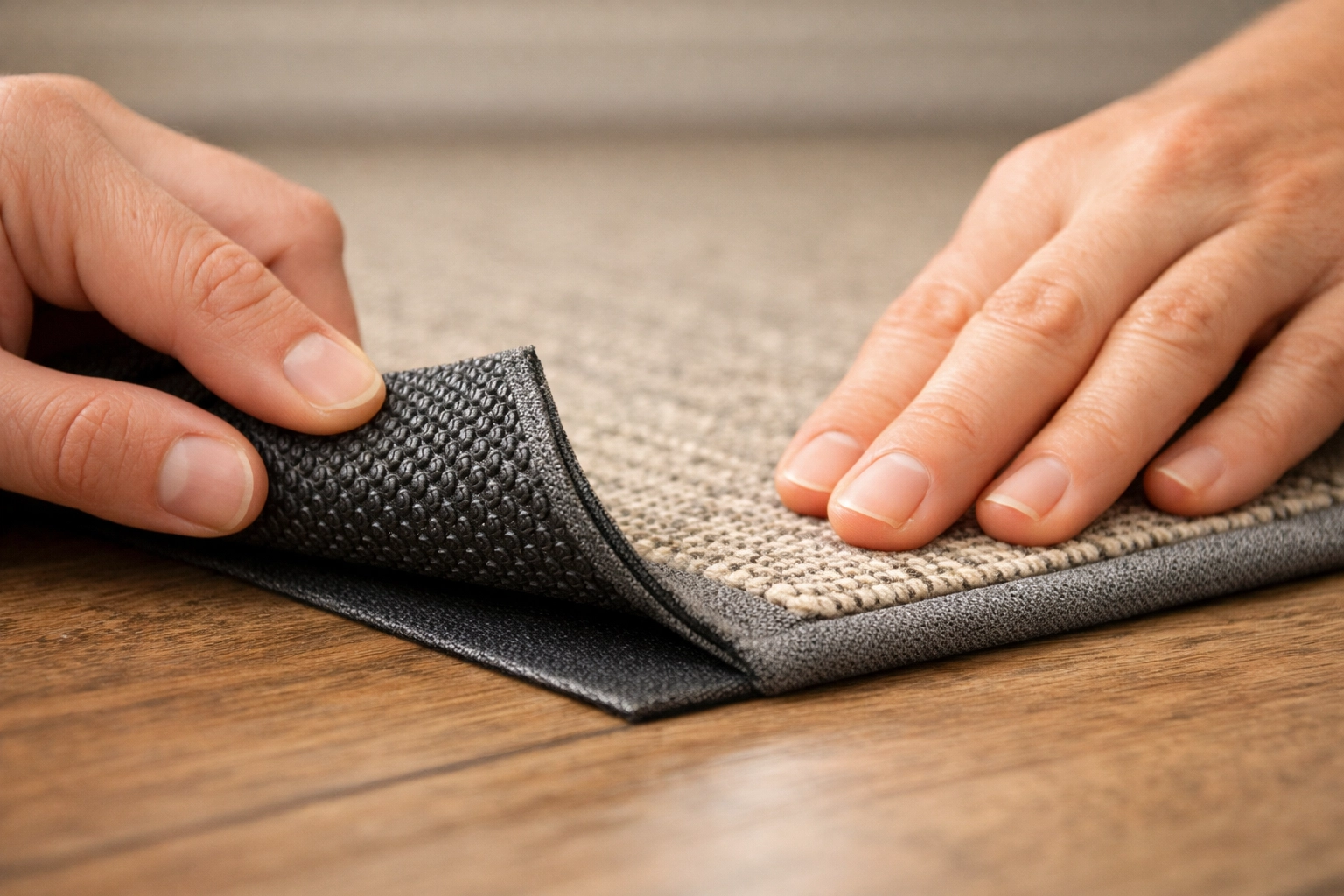
The best non-slip rugs for elderly users feature a low profile (approximately 1/4 inch), beveled edges, and full-coverage rubber or high-quality thermoplastic rubber (TPR) backing. Here's what to prioritize:
Low-profile construction (1/4 inch or less) limits trip edges. If your rug feels thick and plush underfoot, it's probably too tall for optimal safety.
Beveled or tapered edges create smooth transitions from floor to rug surface. Run your hand along the edge: you should feel a gentle slope, not an abrupt cliff.
Full-coverage, professional-grade backing maintains grip after repeated cleaning. Check that the backing extends to the very edges of the rug. Partial backing leaves vulnerable spots where the rug can flip or slide.
Sufficient size ensures typical steps land fully on the rug, not half off the edge. Measure your stepping patterns before you buy. A rug that's too small creates more hazards than it solves.
Easy-clean materials that don't get slick with detergent residue are essential. Natural fibers often work better than synthetic materials that can become slippery when wet.
Consider pairing your rugs with high-quality, non-slip rug pads. Felt and natural rubber pads often combine stability with gentle floor protection, preventing both slipping and scratching.

Room-by-Room Strategies
Living Room
Choose a large rug that extends at least 18 inches beyond the front legs of sofas and chairs. This stabilizes sit-to-stand transitions: one of the most vulnerable moments for falls. Anchor the rug with furniture legs to prevent shifting, and use subtle, low-contrast patterns. Busy patterns can mess with your spatial orientation and make you misjudge distances.
Bedroom
Position non-slip mats or low-profile rugs beside your bed where you most often enter and exit. Your nighttime bathroom trips deserve extra protection: that's when lighting is lower and you're less alert.
Kitchen
Standing areas near the sink and stove benefit from cushioned, anti-fatigue mats with beveled edges. These reduce strain during cooking while providing stable footing. Make sure they're designed to resist slipping even when wet or oily.
Specialized Fall Prevention Products
Non-Slip Adhesive Strips
Non-slip adhesive strips can be applied to stair treads and grab rails to add extra grip and provide visual cues. These are particularly helpful on stairs where depth perception can be challenging. The visual contrast helps you see each step clearly, while the texture prevents slipping.
Bedside Fall Mats
Also called crash mats, padded bedside fall mats provide a cushioned surface next to your bed, minimizing the risk of severe injuries if a fall occurs. Modern versions include non-slip surfaces, beveled edges to reduce tripping, and cushioned designs for both comfort and safety. Place these beside the bed where you most often enter or exit. In some cases, placing them on both sides provides extra protection.

Bathroom Non-Slip Mats
Non-slip bath mats reduce slipping and falling risk in bathrooms, where wet surfaces and wet feet present significant hazards. Use these friction-inducing, water-resistant mats both inside the shower or tub and on the floor outside it. Wash bathroom non-slip mats at least once per week to maintain their effectiveness: soap scum and body oils can significantly reduce traction.
General-Use Floor Mats
Non-slip floor mats can be placed throughout your home to provide stability during movements such as transfers from bed to chair or walker. You can also use non-slip netting under regular rugs to prevent them from slipping, rucking, or lifting at the edges.
Your Selection Checklist
Before you make any purchase, confirm these essential points:
- Test traction on your specific floor type when both dry and slightly damp
- Verify pile height is 1/4 inch or less with beveled edges
- Ensure the size fully covers your stepping zones
- Select a compatible non-slip pad (felt plus natural rubber or all-rubber)
- Confirm easy cleanability without residue that reduces grip
- Check compatibility with your floor finish and test small areas first
The Bottom Line
Every 13 seconds, an older adult is seen in an emergency department for a fall-related injury, and half of these falls occur at home. Compared to treating fall-related injuries: which can cost thousands of dollars and dramatically impact your quality of life: fall prevention products represent an affordable investment in your independence.
You don't need to transform your entire home overnight. Start with the highest-risk areas: bathrooms, bedrooms, and staircases. Gradually work through your living spaces, replacing hazardous surfaces with fall-safe alternatives.
Remember, these products work best as part of a comprehensive fall prevention strategy. Consult with your healthcare provider or a physical therapist about your specific risk factors and home environment. They can provide personalized recommendations that complement the safety products you choose.
With the right non-slip products in place, you can move through your home with greater confidence and maintain the independence you've worked so hard to preserve.
✔ Reviewed by Steve Kerr, PT
Steve Kerr, PT is the founder of Fall Prevention Foundation and a licensed physical therapist with more than 30 years of experience helping older adults improve mobility, reduce fall risks, and remain safely independent at home.
Our educational articles are reviewed for accuracy and are intended to support older adults, caregivers, families, and healthcare professionals.
Learn more about Steve Kerr and the Fall Prevention Foundation →

