


The kitchen is the heart of every home: a place where meals are prepared, conversations happen, and memories are made. Unfortunately, it's also one of the most common locations for falls in the home. Between wet floors, reaching for items on high shelves, and navigating tight spaces with hot dishes in hand, the kitchen presents unique safety challenges that deserve your attention.
Every year, thousands of adults experience falls in their kitchens, often resulting in serious injuries that could have been prevented with simple modifications. The good news? With some thoughtful adjustments and awareness of common hazards, you can transform your kitchen into a safer space without sacrificing functionality or comfort.
Understanding Kitchen Fall Risks
Your kitchen contains multiple fall hazards that you encounter daily. Slippery floors from spilled liquids, grease splatters, cluttered pathways, poor lighting, and the temptation to reach for items stored too high all contribute to fall risk. Unlike other rooms in your home, the kitchen requires constant movement: from refrigerator to sink to stove: often while carrying heavy or hot items that divide your attention.
The combination of hard flooring surfaces, sharp corners on countertops and appliances, and the need to multitask makes kitchen falls particularly concerning. When you add factors like reduced mobility, balance challenges, or vision changes, the risk increases significantly. Fortunately, most kitchen fall hazards are entirely preventable with the right approach.
Strategic Organization: Keep Everything Within Reach

One of the most effective fall prevention strategies involves rethinking how you organize your kitchen. Store your most frequently used items: pots, pans, dishes, utensils, and cooking equipment: on lower shelves at approximately waist height. This simple adjustment eliminates the need to reach overhead or bend down low, both of which can compromise your balance.
Move everyday dishes, glasses, and mugs to cabinets between waist and shoulder height. Place heavier items like large pots, mixing bowls, and small appliances on lower shelves or in base cabinets with pull-out drawers. This organization system not only reduces fall risk but also makes meal preparation more efficient and less physically demanding.
For items that must remain on higher shelves: seasonal serving dishes or rarely used appliances: resist the urge to grab a chair or stand on your tiptoes. Instead, invest in a sturdy step stool with a handrail or support bar. Never use chairs, boxes, or unstable surfaces as makeshift ladders. If you find yourself repeatedly climbing to reach certain items, reconsider whether they truly need to be stored so high.
Floor Safety: Your First Line of Defense
Kitchen floors are notorious for becoming slippery quickly. A few drops of water near the sink, grease splatter from cooking, or a spilled ingredient can create a hazardous surface in seconds. Make it a habit to clean up spills immediately: keep a dedicated hand towel or absorbent cloth within easy reach so you can address messes the moment they happen.
Consider removing throw rugs and area rugs from your kitchen entirely. These moveable floor coverings are significant tripping hazards, especially when their edges curl up or they shift underfoot. If you prefer having a mat near your sink or stove for comfort while standing, choose one with a heavy rubber backing that grips the floor firmly. Ensure it lies completely flat with no turned-up edges or corners.

Examine your kitchen flooring regularly for damage. Loose tiles, cracked linoleum, or worn areas should be repaired promptly. If your kitchen has smooth flooring like tile or polished concrete, use non-skid floor wax and consider whether anti-slip treatments might improve traction. For those planning kitchen renovations, textured flooring materials offer better grip than highly polished surfaces.
Lighting: Illuminate Every Task
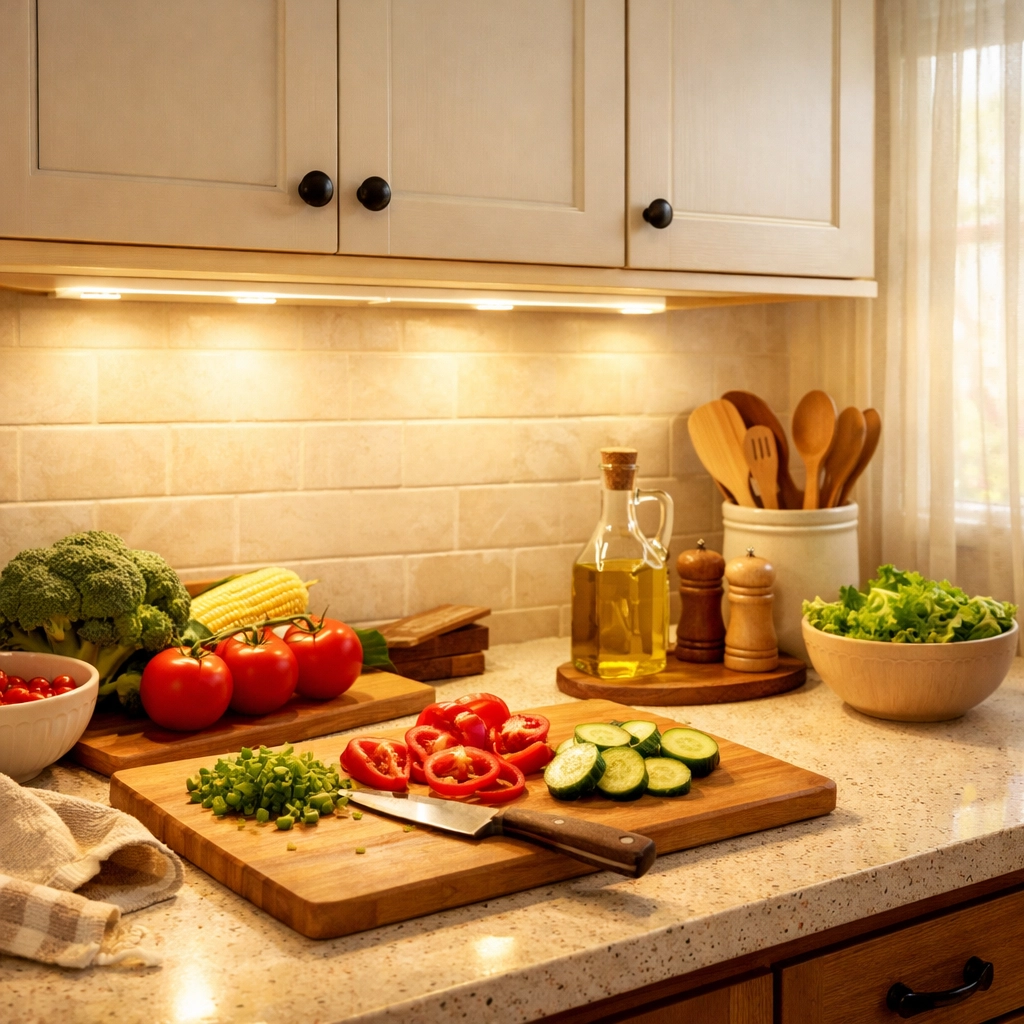
Proper lighting is essential for kitchen safety, yet it's often overlooked. You need bright, even illumination throughout your kitchen: not just a single overhead fixture. Install task lighting under cabinets to illuminate countertops where you prepare food. Add lighting inside pantries and cabinets so you can clearly see what you're reaching for.
Consider motion-activated night lights for middle-of-the-night trips to the kitchen. These automatic lights ensure you're never navigating in darkness, reducing the risk of bumping into furniture or missing a step. Replace burned-out bulbs immediately, and consider upgrading to brighter LED bulbs if your current lighting feels inadequate.
Manage Cords and Clutter
Electrical cords from small appliances create serious tripping hazards, especially when they stretch across countertops or dangle to the floor. Keep cords coiled and secured close to the wall when appliances aren't in use. Never run cords under rugs where they can create uneven surfaces and hidden trip points.
Reduce counter clutter by storing appliances you don't use daily. A cleaner workspace not only looks better but also provides more room to work safely without navigating around obstacles. Keep pathways between your refrigerator, sink, and stove completely clear: you'll cross this "work triangle" dozens of times during meal preparation.
Smart Kitchen Habits for Fall Prevention
Beyond physical modifications, developing safer habits in your kitchen significantly reduces fall risk. Avoid carrying too many items at once, especially when they're heavy or hot. Make multiple trips rather than overloading your arms and obscuring your view of the floor.
Wear supportive, non-slip footwear in the kitchen: never cook in socks, stockings, or smooth-soled slippers. If you typically go barefoot at home, consider dedicated kitchen shoes with grippy soles. Close cabinet doors and drawers immediately after use so you don't accidentally walk into them.
When cooking, turn pot handles inward on the stove so you're less likely to bump into them while moving around. Keep a stable, clutter-free area near the stove where you can safely set down hot pots and pans rather than carrying them across the kitchen. Use oven mitts that provide secure grip and protect your hands: burned or painful hands can cause you to drop items or lose balance.
Additional Kitchen Safety Considerations
Install grab bars or support rails near areas where you stand for extended periods, such as by the stove or sink. These assistive devices aren't just for bathrooms: they provide valuable stability when you need it most. Consult with an occupational therapist who can assess your specific kitchen layout and recommend personalized modifications.
Keep a sturdy chair nearby where you can sit to perform tasks like chopping vegetables or stirring pots. There's no rule that says you must stand for all kitchen work. Taking seated breaks reduces fatigue, which is a significant contributor to falls.
Consider your kitchen's overall layout. If you're planning renovations or modifications, discuss fall prevention with your contractor. Wider walkways, open floor plans without tight corners, and appropriately placed appliances all contribute to safer movement through the space.
Moving Forward with Confidence
Creating a fall-safe kitchen doesn't require a complete remodel or expensive equipment. Most improvements involve simple reorganization, developing better habits, and making modest investments in safety features like proper lighting and non-slip mats. Start by addressing the modifications that feel most relevant to your situation: perhaps reorganizing your most-used items or improving your floor safety.
Remember that fall prevention is an ongoing process, not a one-time fix. As your needs change over time, reassess your kitchen setup and make adjustments accordingly. Stay informed about new safety products and strategies, and don't hesitate to consult with healthcare professionals about specific concerns related to mobility or balance.
Your kitchen should be a place of joy and nourishment, not worry. By implementing these strategies, you're not just preventing falls: you're ensuring that you can continue enjoying one of your home's most important spaces with confidence and independence for years to come.
✔ Reviewed by Steve Kerr, PT
Steve Kerr, PT is the founder of Fall Prevention Foundation and a licensed physical therapist with more than 30 years of experience helping older adults improve mobility, reduce fall risks, and remain safely independent at home.
Our educational articles are reviewed for accuracy and are intended to support older adults, caregivers, families, and healthcare professionals.
Learn more about Steve Kerr and the Fall Prevention Foundation →

