


The bathroom is one of the most dangerous rooms in any home, particularly for older adults. Wet, slippery surfaces combined with hard fixtures create conditions where a simple misstep can lead to serious injury. In fact, falls are the leading cause of injury among adults aged 65 and older, and a significant portion of these accidents happen in the bathroom.
Fortunately, one of the simplest and most affordable ways to reduce bathroom fall risk is by using a quality non-slip bath mat. But with so many options available, how do you know which one offers the best protection? This comprehensive guide walks you through everything you need to know about choosing the best non-slip bath mats for elderly safety, comparing features, materials, and maintenance requirements so you can make an informed decision.
Why Non-Slip Bath Mats Are Essential for Elderly Safety
Bathrooms present a unique combination of hazards. Standing water, soap residue, and steam all contribute to dangerously slick surfaces. For older adults who may experience balance challenges, reduced mobility, or vision changes, these conditions can turn a routine bath or shower into a risky activity.
A properly chosen non-slip bath mat creates a stable, textured surface that helps maintain secure footing even when wet. This simple addition can provide peace of mind for both seniors and their caregivers, allowing for greater independence during daily hygiene routines.
Beyond fall prevention, bath mats also offer cushioning that can reduce foot fatigue and joint strain: particularly important for those who may need to stand for extended periods while bathing.

Key Features to Look for in a Non-Slip Bath Mat
Not all bath mats are created equal. When selecting a non-slip bath mat for elderly safety, prioritize these essential features:
1. Reliable Non-Slip Backing
The most critical feature of any bath mat is its ability to stay firmly in place. Look for mats with one of these two backing types:
- Strong suction cups that adhere securely to smooth tub and shower floors
- Heavy-duty rubberized backing that grips surfaces without sliding
Test the mat's grip before relying on it completely. A mat that shifts even slightly can create the very hazard you're trying to prevent.
2. Adequate Coverage Area
Size matters significantly when it comes to bath mat safety. Extra-large mats (typically 35-40 inches long) provide broader protection and reduce the chance of stepping off the mat's edge onto a slippery surface.
Consider measuring your tub or shower floor before purchasing to ensure you select a mat that covers the primary standing areas adequately.
3. Effective Drainage
Water pooling on top of a bath mat can make the surface slippery and cause the mat to float or shift. Choose mats with built-in drain holes that allow water to escape quickly, keeping the surface textured and secure throughout your bath or shower.
4. High-Contrast Colors
Vision changes are common with aging, and low-contrast colors can make it difficult to distinguish where the mat begins and ends. Selecting a bath mat in a color that contrasts clearly with your tub or shower floor helps improve spatial awareness and reduces missteps.
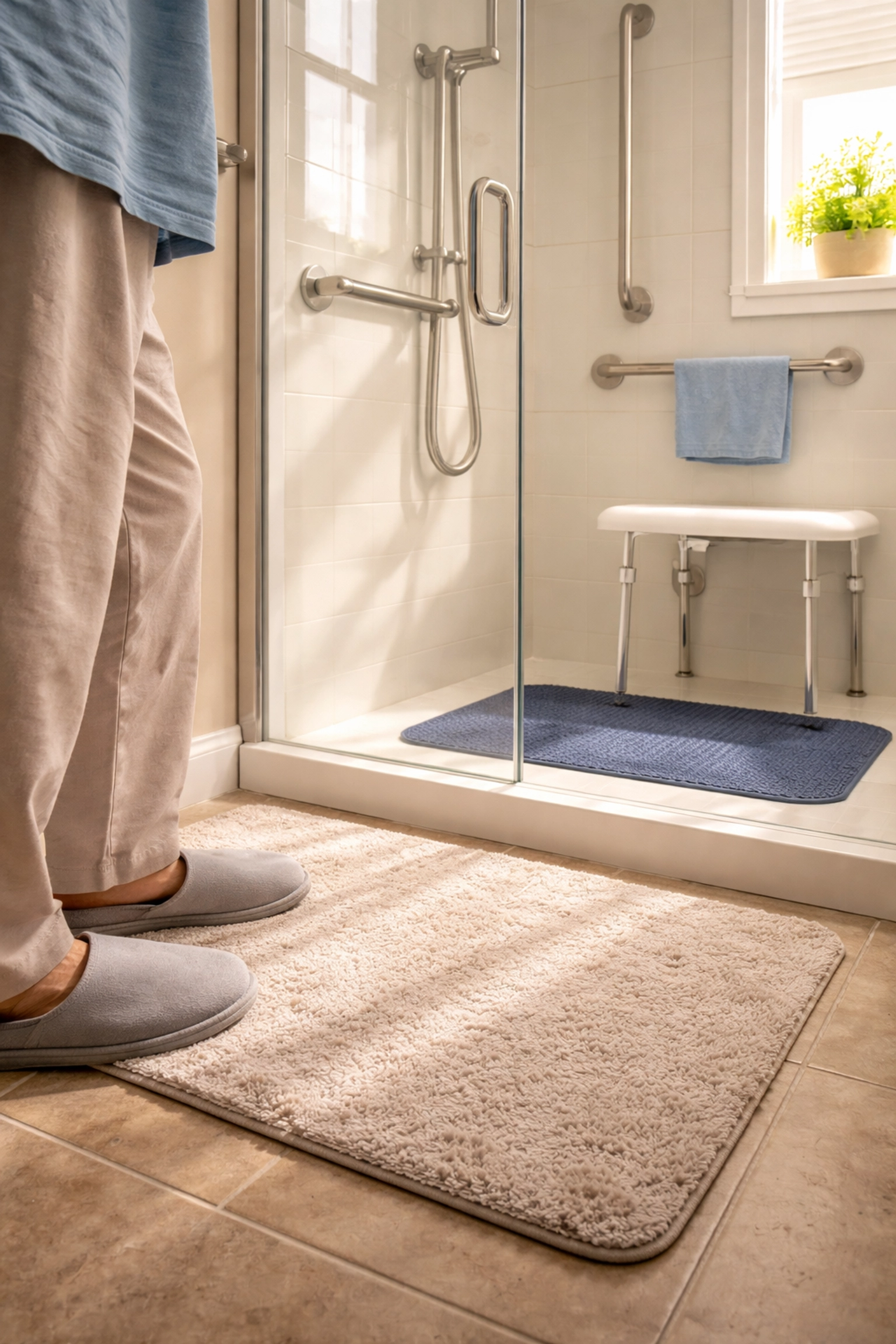
For example, a dark blue mat in a white tub is much easier to see than a white mat in the same space.
5. Cushioning and Comfort
While grip is the priority, comfort matters too. Mats with adequate cushioning reduce strain on feet, ankles, and knees. This is especially beneficial for those who may need to stand for longer periods or who experience joint discomfort.

Types of Non-Slip Bath Mats Compared
Understanding the different types of bath mats available can help you choose the best option for your specific needs:
Suction Cup Mats
Best for: Standard tubs and showers with smooth surfaces
These classic mats feature rows of suction cups on the bottom that create a vacuum seal with smooth tub and tile surfaces. They're affordable, widely available, and effective when properly installed.
Pros:
- Excellent grip on smooth surfaces
- Easy to remove for cleaning
- Generally affordable
Cons:
- Don't work well on textured tub floors
- Suction cups can wear out over time
- May leave marks on surfaces
Rubber Bath Mats
Best for: Various bathroom surfaces and those seeking durability
Made from solid rubber or rubber compounds, these mats rely on their weight and material properties to stay in place. They often work on both smooth and textured surfaces.
Pros:
- Durable and long-lasting
- Work on various surface types
- Often mildew-resistant
Cons:
- Can be heavier to handle
- May take longer to dry
- Sometimes more expensive
Adhesive Bath Mats
Best for: Permanent installation and maximum security
These mats feature adhesive backing that bonds semi-permanently to the tub or shower floor. Once installed, they don't move at all.
Pros:
- Maximum stability
- Won't shift or curl at edges
- Good for those who need extra security
Cons:
- Difficult to remove for cleaning
- May damage surfaces upon removal
- Not ideal for rental properties
Textured Bath Strips
Best for: Those who prefer minimal coverage or have textured tub floors
Rather than a full mat, these adhesive strips create textured zones directly on the tub floor. They're virtually invisible and don't interfere with drainage.
Pros:
- Discreet appearance
- Don't trap water
- Work on textured surfaces
Cons:
- Less cushioning
- Permanent installation
- Cover less surface area
Proper Installation and Maintenance
Even the best non-slip bath mat won't protect you if it's not properly installed and maintained. Follow these guidelines to ensure ongoing safety:
Installation Tips
- Clean the surface thoroughly before placing the mat to ensure proper adhesion
- Press down firmly on all suction cups to create a complete seal
- Test the mat's grip by stepping on it carefully before full weight-bearing
- Ensure full contact with the tub floor: gaps or air bubbles reduce effectiveness
Maintenance Best Practices
Regular maintenance is essential for both hygiene and safety:
- Wash your bath mat at least once per week to prevent mold and mildew buildup
- Lift the mat weekly to clean and disinfect the floor beneath it: residue buildup can weaken the mat's seal over time
- Inspect suction cups regularly for wear, damage, or loss of flexibility
- Replace mats showing signs of deterioration: curling edges, worn suction cups, or reduced grip are all signals that it's time for a new mat
- Allow the mat to dry between uses when possible to prevent bacterial growth
Most quality bath mats are machine washable, which makes maintenance convenient. Check the manufacturer's care instructions for specific guidance.
Additional Bathroom Safety Considerations
While a non-slip bath mat is an excellent first step, consider these additional measures to create a truly safe bathroom environment:
- Grab bars installed near the tub, shower, and toilet provide stable support when standing or sitting
- Adequate lighting helps with visibility, especially during nighttime bathroom visits
- A shower chair or transfer bench reduces the need to stand for extended periods
- Non-slip slippers or falls prevention socks provide protection when walking on bathroom tile
- Raised toilet seats can make sitting and standing easier and safer
For a comprehensive assessment of your bathroom's safety, consider consulting with a healthcare professional or exploring our fall risk assessment services.
Making the Right Choice for Your Situation
Choosing the best non-slip bath mat comes down to understanding your specific needs and bathroom setup. Consider these questions:
- What type of surface does your tub or shower have (smooth or textured)?
- How much coverage do you need based on the size of your bathing area?
- Will the mat need to be removed frequently for cleaning?
- Are there vision considerations that make color contrast important?
- Is cushioning a priority for comfort?
By evaluating these factors against the features discussed in this guide, you can select a bath mat that provides genuine protection without sacrificing convenience.
Moving Forward with Confidence
Bathroom safety doesn't have to be complicated or expensive. A quality non-slip bath mat is one of the most straightforward investments you can make to reduce fall risk and maintain independence during daily routines.
By choosing a mat with reliable grip, adequate coverage, effective drainage, and easy maintenance, you're taking a meaningful step toward a safer home environment. Combined with regular inspection and proper care, the right bath mat can provide years of dependable protection.
For more information about creating a safer living space, explore our learning resources or connect with our team to discuss your specific fall prevention needs. With the right tools and knowledge, you can continue enjoying daily activities with greater confidence and peace of mind.
✔ Reviewed by Steve Kerr, PT
Steve Kerr, PT is the founder of Fall Prevention Foundation and a licensed physical therapist with more than 30 years of experience helping older adults improve mobility, reduce fall risks, and remain safely independent at home.
Our educational articles are reviewed for accuracy and are intended to support older adults, caregivers, families, and healthcare professionals.
Learn more about Steve Kerr and the Fall Prevention Foundation →

