


The bathroom is one of the most dangerous rooms in your home. Every year, thousands of older adults experience falls in this space: many of them while stepping in or out of the shower or tub. You probably already have a non-slip bath mat, thinking you've taken care of the problem. But here's the thing: that mat might not be protecting you the way you think it is.
Non-slip bath mats for elderly individuals are only effective when they're chosen wisely, installed correctly, and maintained regularly. Unfortunately, many well-meaning families make critical mistakes that turn these safety tools into potential hazards.
The good news? These mistakes are easy to fix once you know what to look for. Let's walk through the seven most common non-slip bath mat mistakes and how you can correct them today to create a safer bathroom environment for yourself or your loved ones.
Mistake #1: Ignoring Worn-Out Suction Cups
Those little suction cups on the bottom of your mat are the unsung heroes of bathroom safety. They're what keep your mat firmly anchored to the tub or shower floor. But here's what most people don't realize: suction cups deteriorate over time.
When suction cups start peeling, cracking, or losing their flexibility, your mat can shift unexpectedly underfoot. What was once a safety device becomes a tripping hazard.
The Fix: Make it a habit to inspect your non-slip shower mat for elderly family members at least once a month. Look for suction cups that appear flattened, discolored, or separated from the mat. Before each shower, give the mat a firm tug to test its grip. If it moves easily, it's time for a replacement.
Don't wait until someone slips to take action. A new bath mat is a small investment compared to the cost: physical and emotional: of a fall-related injury.

Mistake #2: Choosing a Mat That's Too Small
A bath mat that only covers a small portion of your tub or shower floor leaves you vulnerable every time you step outside its boundaries. Think about how you move when you're bathing: you shift your weight, reach for soap, and turn around. If your mat doesn't cover your entire standing area, you're stepping onto slippery surfaces multiple times during each shower.
The Fix: Measure your tub or shower floor before purchasing a new mat. For most bathtubs, you'll want a mat that runs nearly the full length: typically at least 21 by 21 inches at minimum, though longer is often better. For showers, ensure the mat covers everywhere you typically stand, including areas where you might reach or lean.
When in doubt, go bigger. A larger non-slip bath mat for elderly users provides a wider margin of safety and peace of mind.
Mistake #3: Placing Your Mat on the Wrong Surface
Not all tubs and showers are created equal. Some have smooth, glossy surfaces while others feature textured or matte finishes. Here's the problem: suction cups work by creating a seal against the surface. On highly textured or porous surfaces, that seal can't form properly.
Similarly, if your tub has a built-in textured bottom for traction, a suction cup mat may not adhere well: and you might not even need one in the same way.
The Fix: Before purchasing a non-slip shower mat for elderly loved ones, examine your tub or shower surface carefully. Run your hand across it. Is it smooth and glossy? Suction cup mats typically work well here. Is it heavily textured or made of natural stone? You may need adhesive non-slip strips or a weighted mat designed for textured surfaces instead.
Matching your safety solution to your specific bathroom surface is essential for effective fall prevention.

Mistake #4: Installing the Mat Incorrectly
You might be surprised how often this happens: someone tosses their bath mat into a wet tub and expects it to stick. It won't: at least not reliably.
Water, soap residue, and body oils all interfere with suction cup adhesion. If your mat wasn't installed on a clean, dry surface, it's essentially just floating on top of the tub floor, ready to slide at the worst possible moment.
The Fix: Proper installation takes just a few extra minutes but makes all the difference. Here's the process:
- Clean your tub or shower floor thoroughly with a mild cleaner
- Rinse away all soap and residue
- Dry the surface completely with a towel
- Position your mat and press down firmly on every suction cup
- Conduct a pull test before turning on the water
If you notice your mat shifting during showers, remove it, clean both the mat and the tub surface, and reinstall following these steps.
Mistake #5: Skipping Regular Deep Cleaning
Rinsing your mat after each shower feels like enough, but it's not. Over time, soap scum, shampoo residue, mineral deposits from hard water, and body oils build up on both sides of your mat. This creates two problems: the top surface becomes slippery despite its textured design, and the suction cups can't grip properly because of the film underneath.
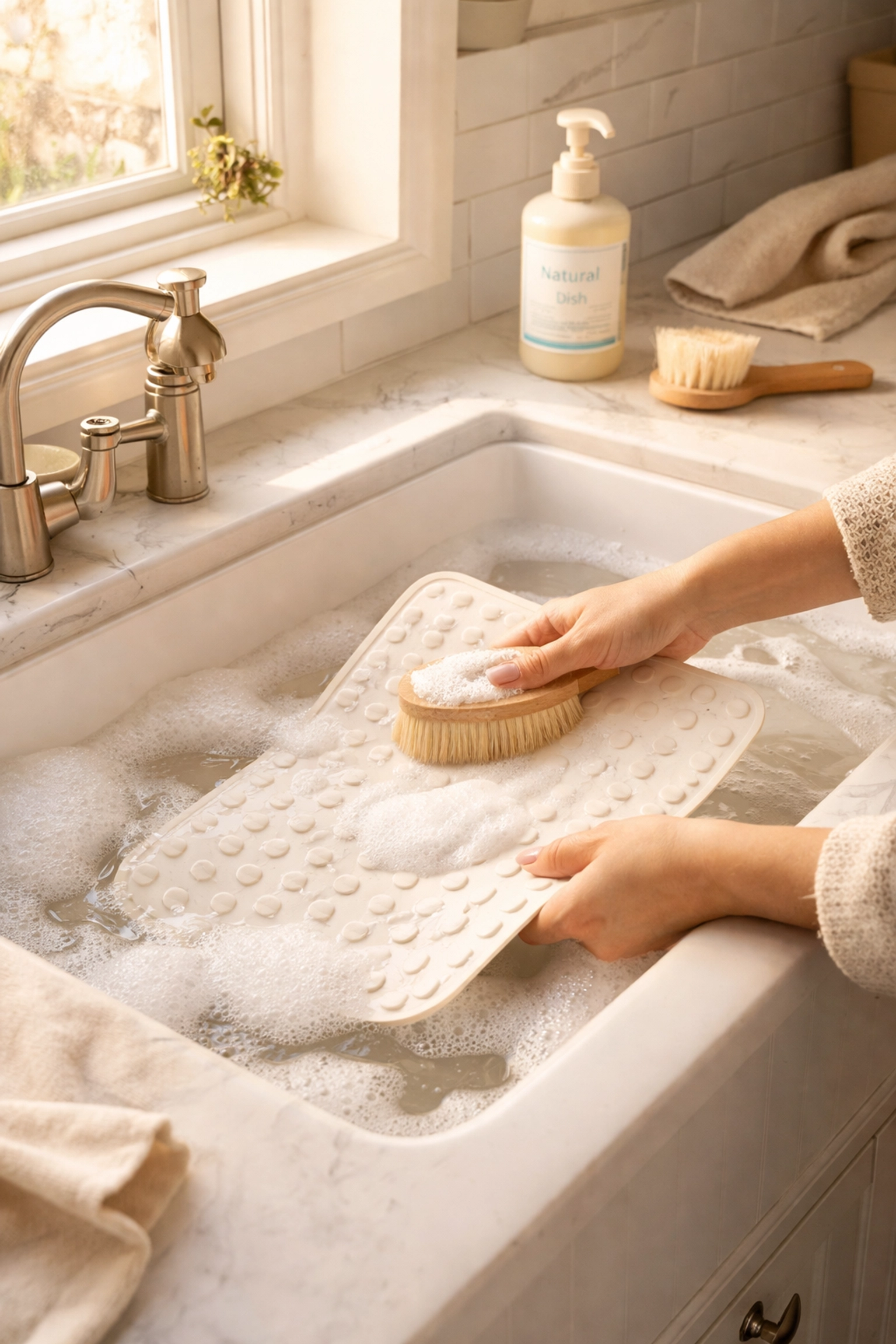
The Fix: Establish a weekly deep-cleaning routine for your bath mat. Here's a simple approach:
- Remove the mat from the tub
- Scrub both sides with warm water and mild dish soap or a bathroom cleaner
- Pay special attention to the suction cups, cleaning around and under each one
- Rinse thoroughly
- Allow to dry completely before reinstalling
This simple maintenance extends the life of your mat and keeps it performing at its best.
Mistake #6: Choosing a Mat Without Proper Drainage
Water pooling on top of your bath mat defeats its entire purpose. If water can't drain away quickly, you're essentially standing on a wet, slippery surface: exactly what you were trying to avoid.
Many inexpensive bath mats lack adequate drainage holes, or the holes they have are too small or poorly positioned to be effective.
The Fix: When shopping for non-slip bath mats for elderly family members, look specifically for mats with pre-cut drainage holes. These holes should be distributed throughout the mat, not just along the edges. The holes allow water to flow through to the tub drain below, keeping the standing surface as dry as possible.
Additionally, look for mats with a slightly raised or textured surface pattern that channels water toward the drainage holes rather than letting it pool in flat areas.
Mistake #7: Keeping Your Mat Far Too Long
Bath mats aren't meant to last forever. The materials break down, suction cups weaken, and the textured surface that provides grip wears smooth over time. Yet many families use the same bath mat for years: sometimes even a decade or more: without considering replacement.
Using an aged mat is one of the most common and dangerous mistakes in bathroom safety.
The Fix: Plan to replace your bath mat every one to two years, depending on use frequency. If multiple people use the same bathroom daily, lean toward annual replacement.
Between uses, always hang your mat to dry or lay it flat outside the tub. Leaving it in standing water promotes mold and mildew growth, which weakens the material and shortens the mat's effective lifespan.

Beyond the Bath Mat: Creating a Complete Bathroom Safety System
While a properly chosen and maintained non-slip bath mat is essential, it's just one piece of the bathroom safety puzzle. Consider these additional strategies to reduce fall risk:
- Install grab bars near the tub, shower, and toilet for added stability
- Improve lighting so you can see clearly, especially during nighttime bathroom trips
- Remove clutter from the bathroom floor that could cause tripping
- Consider falls prevention socks or non-slip slippers for elderly women and men to wear when walking on tile floors
- Add a non-slip rug outside the tub or shower for safe transitions
For more comprehensive guidance on creating safer living spaces, consult with a healthcare provider or occupational therapist who can assess your specific needs.
Taking Action Today
Bathroom safety doesn't have to be complicated or expensive. By avoiding these seven common mistakes with your non-slip bath mat, you're taking meaningful steps toward preventing falls and maintaining independence.
Take a few minutes today to inspect your current bath mat. Check those suction cups. Evaluate the size and coverage. Consider when you last replaced it. These small actions can make an enormous difference in keeping you or your loved ones safe.
You deserve to feel confident and secure in every room of your home: including the bathroom. With the right tools and knowledge, that confidence is absolutely within reach.
✔ Reviewed by Steve Kerr, PT
Steve Kerr, PT is the founder of Fall Prevention Foundation and a licensed physical therapist with more than 30 years of experience helping older adults improve mobility, reduce fall risks, and remain safely independent at home.
Our educational articles are reviewed for accuracy and are intended to support older adults, caregivers, families, and healthcare professionals.
Learn more about Steve Kerr and the Fall Prevention Foundation →
