


Let's be honest: wearing shoes inside the house just isn't comfortable for most of us. After a long day, there's nothing quite like kicking off your footwear and feeling free. But if you or someone you love is an older adult, going barefoot or wearing regular socks on slippery floors can be risky.
Every year, millions of older adults experience falls at home, and many of these happen simply from slipping on smooth surfaces while walking around in regular socks. The good news? There's a simple, affordable solution that many people overlook: non-slip socks for elderly individuals.
In this guide, we'll walk you through everything you need to know about these handy safety accessories: how they work, what to look for, and how they can fit into a broader fall prevention strategy that helps you or your loved one stay safe and independent at home.
Why Falls at Home Are Such a Big Deal
Falls are the leading cause of injury among adults 65 and older. And here's something that might surprise you: most of these falls don't happen outside or in unfamiliar places. They happen right at home, in the very spaces where we feel most comfortable.
Hardwood floors, tile bathrooms, and smooth kitchen surfaces are common culprits. When you combine these slick surfaces with regular socks: or even bare feet that have lost some of their natural grip over time: the risk of slipping increases significantly.
That's where non-slip socks come in. They're not a magic fix for everything, but they're one practical piece of the fall prevention puzzle that's worth considering.
What Are Non-Slip Socks and How Do They Work?
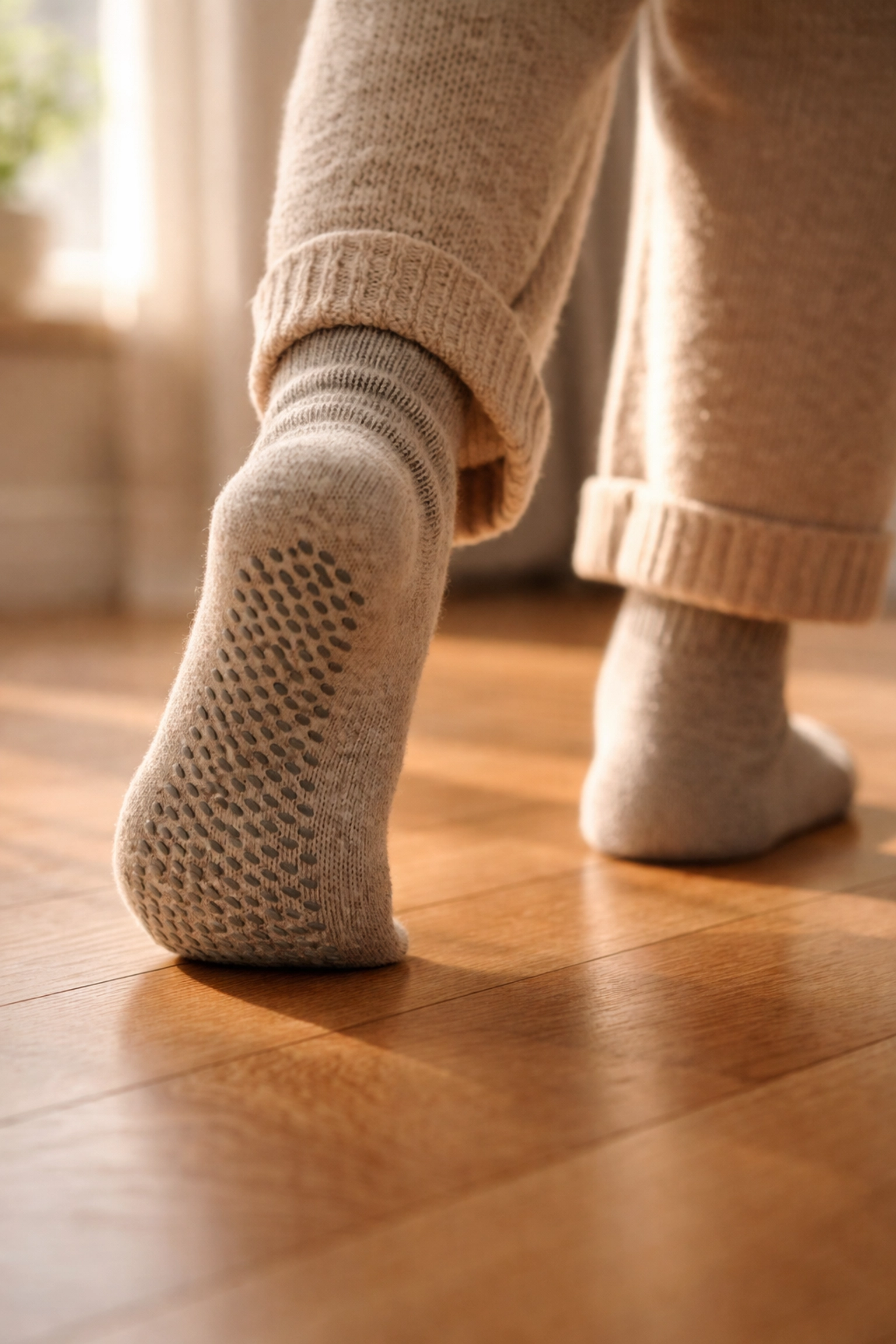
Non-slip socks look a lot like regular socks, but with one important difference: they have textured grip patterns on the soles. These patterns are typically made from rubber or silicone materials that create traction against smooth floor surfaces.
Here's what makes them effective:
Grip patterns on the bottom – Most quality non-slip socks feature an all-around dual tread pattern. This means the grips cover enough of the sole that even if the sock shifts slightly on your foot, you still maintain contact with the floor through the textured areas.
Snug, comfortable fit – Unlike rigid footwear, non-slip socks fit closely to the contours of your feet. This actually provides better sensory feedback, allowing you to feel the ground beneath you and react more naturally to changes in surface or balance.
Flexible movement – Because they're soft and flexible, these socks allow for natural foot movement. You're not restricted the way you might be in stiff shoes, which can actually help with balance and control.
Breathable materials – Most are made from comfortable blends like cotton and nylon, so they're pleasant to wear for extended periods around the house.
Key Features to Look For
Not all non-slip socks are created equal. If you're shopping for yourself or a loved one, here are some features worth considering:
Coverage of grip patterns – Look for socks where the grips extend across most of the sole, not just a small patch. This provides more consistent traction regardless of how your foot lands.
Quality of materials – The grip material should be durable enough to last through regular washing. Cheap versions may lose their grip after just a few cycles in the laundry.
Comfortable fit – Socks that are too tight can restrict circulation, while loose socks can bunch up and actually create a tripping hazard. Look for options with gentle elastic that stays in place without squeezing.
Appropriate thickness – Some people prefer thicker, cushioned socks for warmth and comfort, while others like thinner options for better floor feel. Consider personal preference and any specific foot sensitivities.

The Benefits of Non-Slip Socks for Elderly Individuals
Research on non-slip socks shows promising results. One observational study found that no falls were registered among participants wearing non-slip socks, suggesting they had a significant preventive effect. A systematic review of multiple studies also concluded that these socks helped reduce fall recurrence.
Beyond the research, there are practical everyday benefits:
Independence at home – When you feel more confident walking around your house, you're more likely to stay active and maintain your independence. That confidence matters.
Comfort without compromise – You don't have to choose between comfort and safety. Non-slip socks let you enjoy the cozy feeling of being sock-footed while still having that extra layer of protection.
Easy to use – There's no learning curve here. You simply put them on like regular socks and go about your day.
Affordable option – Compared to many other fall prevention tools, non-slip socks are relatively inexpensive and widely available.
Important Considerations: Non-Slip Socks Aren't for Everyone
Here's something crucial to understand: non-slip socks are not a one-size-fits-all solution. While they can be helpful for many people, they're not appropriate for everyone.
According to fall prevention experts, non-slip socks may not be suitable for:
- Individuals with peripheral neuropathy or those who cannot feel their feet well
- People with a shuffling gait or conditions like Parkinson's disease
- Those with cognitive impairment, as the socks may cause confusion
- Non-ambulatory individuals who primarily use wheelchairs
- Anyone at risk of skin breakdown or foot injuries
One important rule: never wear non-slip socks inside shoes. This combination can actually increase fall risk because the grip pattern may interact poorly with the shoe interior.
The most effective approach is always an individualized assessment. If you're unsure whether non-slip socks are right for you or a family member, it's worth having a conversation with a healthcare provider who can evaluate specific mobility needs and conditions.
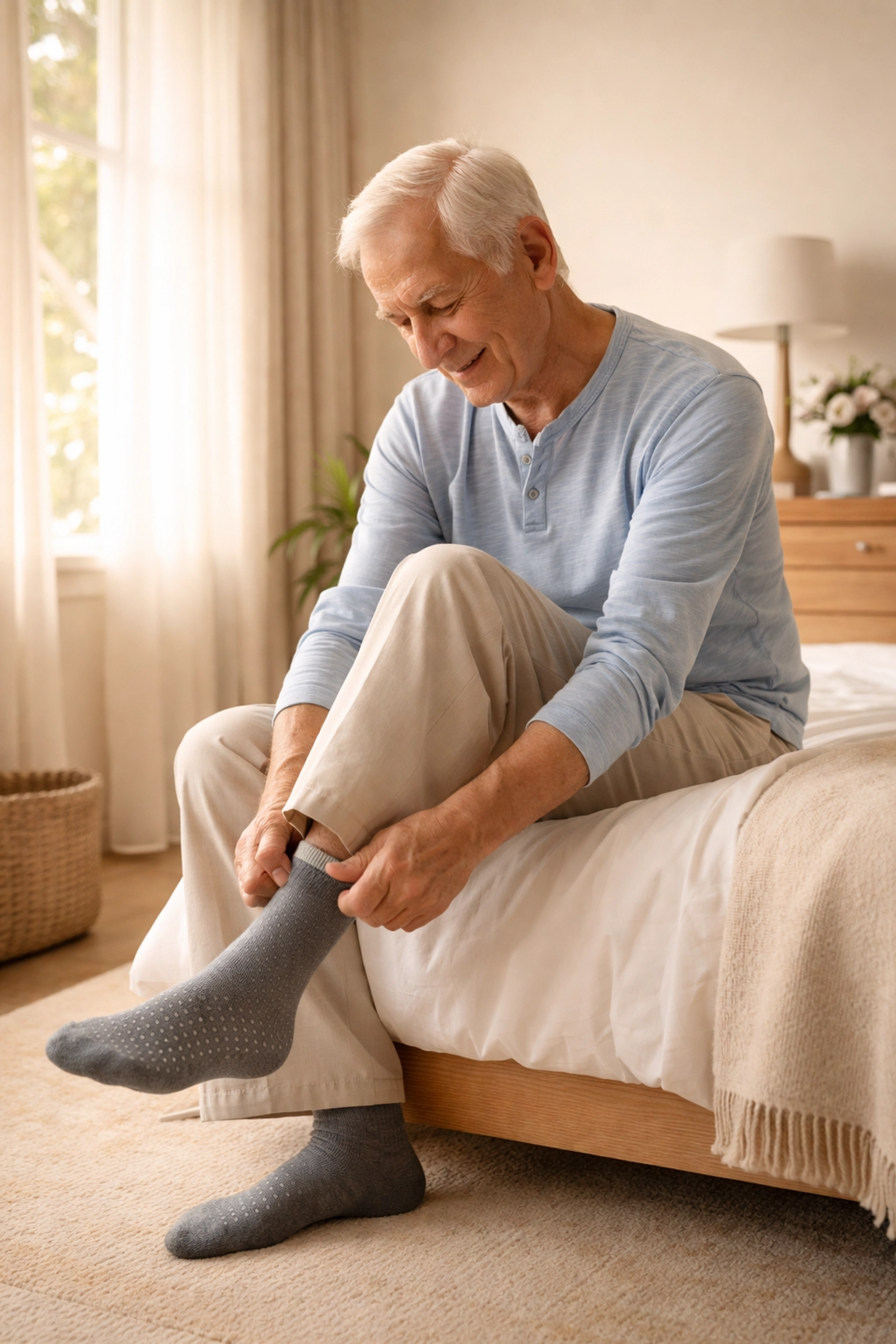
Combining Non-Slip Socks with Other Fall Prevention Strategies
Non-slip socks work best as part of a comprehensive approach to fall prevention. Think of them as one tool in your safety toolkit: valuable on their own, but even more effective when combined with other measures.
Mobility support devices can make a significant difference. For example, the Independence Pole provides a stable support point that helps with standing, sitting, and moving around the home. Unlike grab bars that are fixed in one location, these poles can be positioned wherever support is needed most.
For those who need additional stability, options like the Independence Pole with Crossbar offer even more support during transitions.
Other strategies to consider:
- Removing loose rugs or securing them with non-slip backing
- Ensuring adequate lighting throughout the home, especially in hallways and bathrooms
- Keeping walkways clear of clutter and obstacles
- Installing grab bars in bathrooms near toilets and showers
- Regular vision and hearing check-ups
You can explore more mobility tools for fall prevention to see what might work best for your situation.
Tips for Getting Started
If you've decided non-slip socks might be helpful, here are some practical tips:
Start with a trial period – Buy one or two pairs first to see how they feel before investing in more.
Check the fit – Make sure they're snug but not restrictive. Walk around on different surfaces in your home to test them out.
Establish a routine – Keep your non-slip socks in an easy-to-reach spot so putting them on becomes automatic.
Inspect regularly – Over time, the grip patterns can wear down. Replace socks when you notice the texture becoming smooth.
Have multiple pairs – It's helpful to have several pairs so you always have a clean, dry option available.
Moving Forward with Confidence
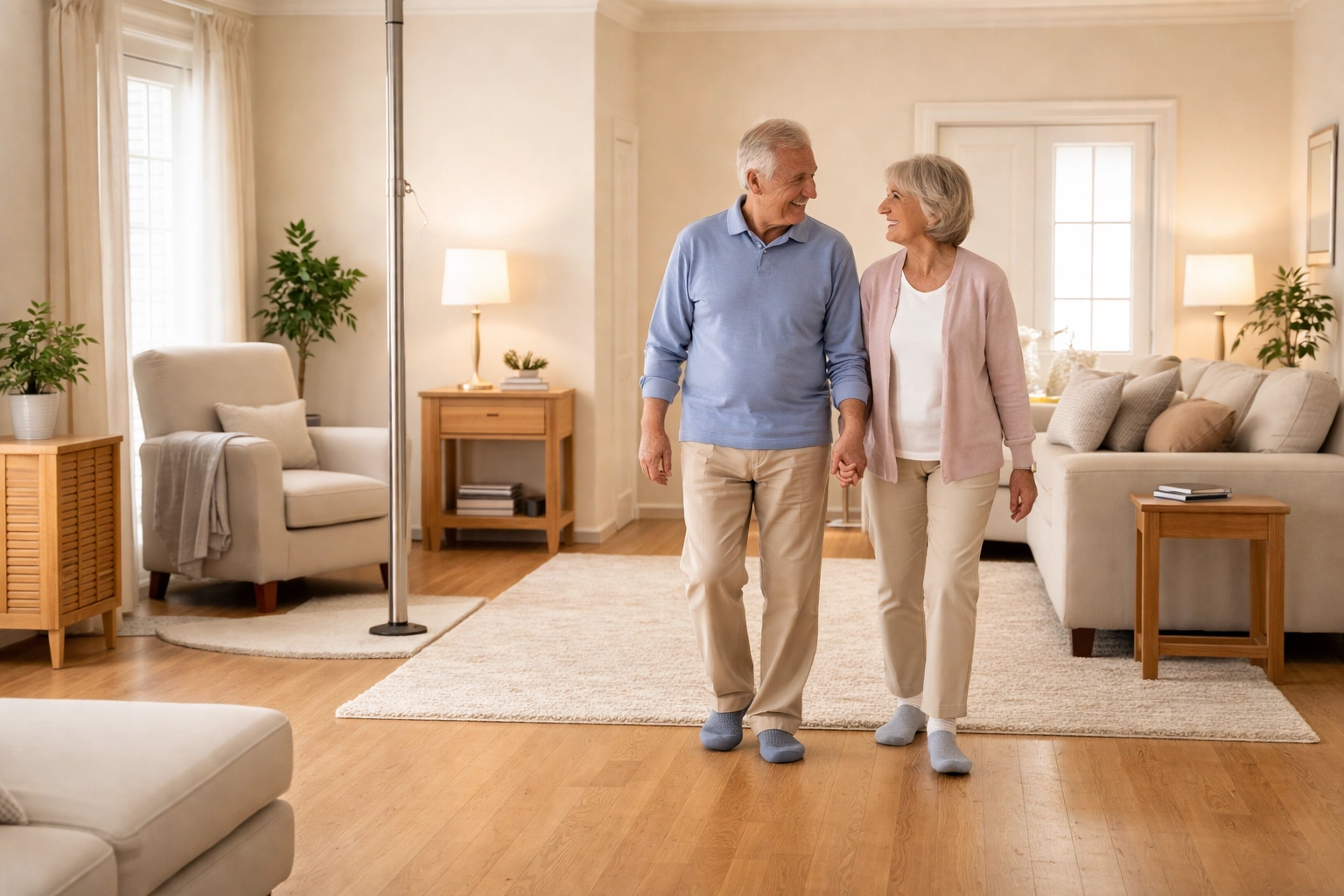
Falls don't have to be an inevitable part of aging. With the right combination of awareness, environment modifications, and simple tools like non-slip socks, it's possible to significantly reduce risk while maintaining the comfort and independence you deserve.
Non-slip socks for elderly individuals won't solve every fall-related concern, but they address one common and often overlooked risk factor: slipping on smooth floors while enjoying the comfort of your own home.
If you're exploring fall prevention options for yourself or someone you care about, start by assessing the specific needs and challenges involved. Consider consulting with a healthcare provider to determine which strategies make the most sense, and remember that small changes often add up to meaningful improvements in safety and confidence.
At the Fall Prevention Foundation, we believe everyone deserves to move through their home: and their life: with security and dignity. Sometimes that starts with something as simple as the right pair of socks.
For more resources and information about fall prevention, visit our Learning Resources or consider supporting our mission to help more people stay safe and independent.
✔ Reviewed by Steve Kerr, PT
Steve Kerr, PT is the founder of Fall Prevention Foundation and a licensed physical therapist with more than 30 years of experience helping older adults improve mobility, reduce fall risks, and remain safely independent at home.
Our educational articles are reviewed for accuracy and are intended to support older adults, caregivers, families, and healthcare professionals.
Learn more about Steve Kerr and the Fall Prevention Foundation →

