


Non-slip socks seem like such a simple solution. You buy a pair with those grippy rubber dots on the bottom, hand them to your loved one, and breathe a sigh of relief knowing you've done something to reduce their fall risk.
But here's the thing: non-slip socks aren't a magic fix. In fact, when used incorrectly, they can actually increase the risk of falls and cause new problems you never anticipated.
Every year, millions of older adults experience falls, and many of those incidents happen right at home, often while wearing footwear that was supposed to help. The good news? Most of the mistakes people make with non-slip socks are completely avoidable once you know what to look for.
In this guide, we'll walk through the seven most common mistakes caregivers and families make with falls prevention socks, and exactly how to fix each one.
Mistake #1: Giving Non-Slip Socks to Everyone Without Assessment
One of the biggest misconceptions about non-slip socks is that they're universally helpful. Many families and even some care facilities hand them out as a blanket solution for everyone, assuming more grip equals more safety.
Unfortunately, that's not how it works.
Non-slip socks can actually be problematic for certain individuals, including:
- People with peripheral neuropathy who can't feel their feet properly
- Those with a shuffling gait pattern
- Individuals with Parkinson's disease
- Anyone who drags their feet when walking
For these individuals, the grippy surface can catch unexpectedly on flooring, disrupting their natural movement pattern and potentially causing a stumble or fall.
How to Fix It: Before introducing non-slip socks, consider the individual's specific mobility challenges and health conditions. If you're unsure whether they're appropriate, consult with a healthcare provider or physical therapist who can assess gait patterns and recommend the best footwear solution.
Mistake #2: Wearing Non-Slip Socks Inside Shoes
This one surprises a lot of people. If non-slip socks are good on their own, wearing them inside shoes should provide double the protection, right?
Actually, no. When you wear non-slip socks inside shoes, the rubber grips can bunch up against the shoe's interior. This bunching creates uncomfortable pressure points that can lead to skin irritation, blisters, and even wounds: especially dangerous for individuals with diabetes or circulation issues.
The grips are designed to interact with smooth floor surfaces, not the inside of a shoe. When trapped inside footwear, they simply don't work as intended.
How to Fix It: Keep non-slip socks and shoes separate. When your loved one is wearing proper shoes, regular socks work just fine. Save the non-slip socks for times when they're walking around in socks only: like first thing in the morning or during the night.
Mistake #3: Ignoring How Cognitive Changes Affect Sock Use
For individuals living with dementia or other cognitive impairments, non-slip socks can create unexpected challenges. The unusual sensation of rubber grips against the floor may feel confusing or unsettling. Walking in socks rather than shoes can also feel abnormal, potentially causing anxiety or agitation.
Some individuals may repeatedly try to remove the socks because they feel "wrong," or they might not understand why their feet feel different when walking.
How to Fix It: Pay attention to how your loved one responds to non-slip socks. If they seem uncomfortable, confused, or repeatedly remove them, consider alternatives like well-fitting non-slip slippers or lightweight indoor shoes. The goal is safety and comfort: both matter equally.

Mistake #4: Choosing the Wrong Size
It's tempting to grab whatever size looks close enough, especially when you're shopping online or in a hurry. But ill-fitting non-slip socks create serious safety issues.
Too loose: Socks can slip off entirely or bunch up under the foot, creating an unstable walking surface. The grips end up in the wrong position, defeating their entire purpose.
Too tight: Overly snug socks can restrict circulation, cause discomfort, and lead to skin breakdown: particularly concerning for individuals with diabetes or vascular conditions.
How to Fix It: Take the time to measure properly and consult the manufacturer's size chart. The socks should fit snugly without being restrictive, with grips lying flat and fully covering the sole. Check the fit periodically, as foot size can change due to swelling or other factors.
Mistake #5: Neglecting Proper Washing and Maintenance
Those rubber grips aren't invincible. Over time, they accumulate dirt, oils, and debris that reduce their effectiveness. A pair of non-slip socks that felt secure three months ago might now be slippery and worn.
Many people also make the mistake of washing non-slip socks the same way they wash regular socks: tossing them in with everything else on a hot cycle. This can break down the rubber grips and shorten the socks' useful life significantly.
How to Fix It:
- Turn socks inside out before washing to protect the grips
- Use a mesh laundry bag for extra protection
- Wash on a gentle cycle with cool or warm water
- Avoid high-heat drying: air dry when possible
- Replace socks when grips become visibly worn, cracked, or less tacky

Mistake #6: Overlooking Hygiene and Infection Control
Here's something many people don't think about: when someone walks around in non-slip socks, those socks pick up whatever is on the floor: dust, bacteria, and other contaminants. If the same socks are then worn into bed, all of that transfers to the sheets and comes into contact with skin.
This is especially concerning in healthcare settings, but it applies at home too. Wearing the same socks all day: from walking to resting to walking again: increases bacterial buildup and potential skin issues.
How to Fix It:
- Change socks frequently throughout the day
- Provide fresh socks after any period of walking, before getting into bed
- Consider having separate "walking socks" and using clean slippers or going barefoot (on safe surfaces) when resting
- Keep multiple pairs on hand so clean options are always available
Mistake #7: Failing to Check Fit and Alignment Regularly
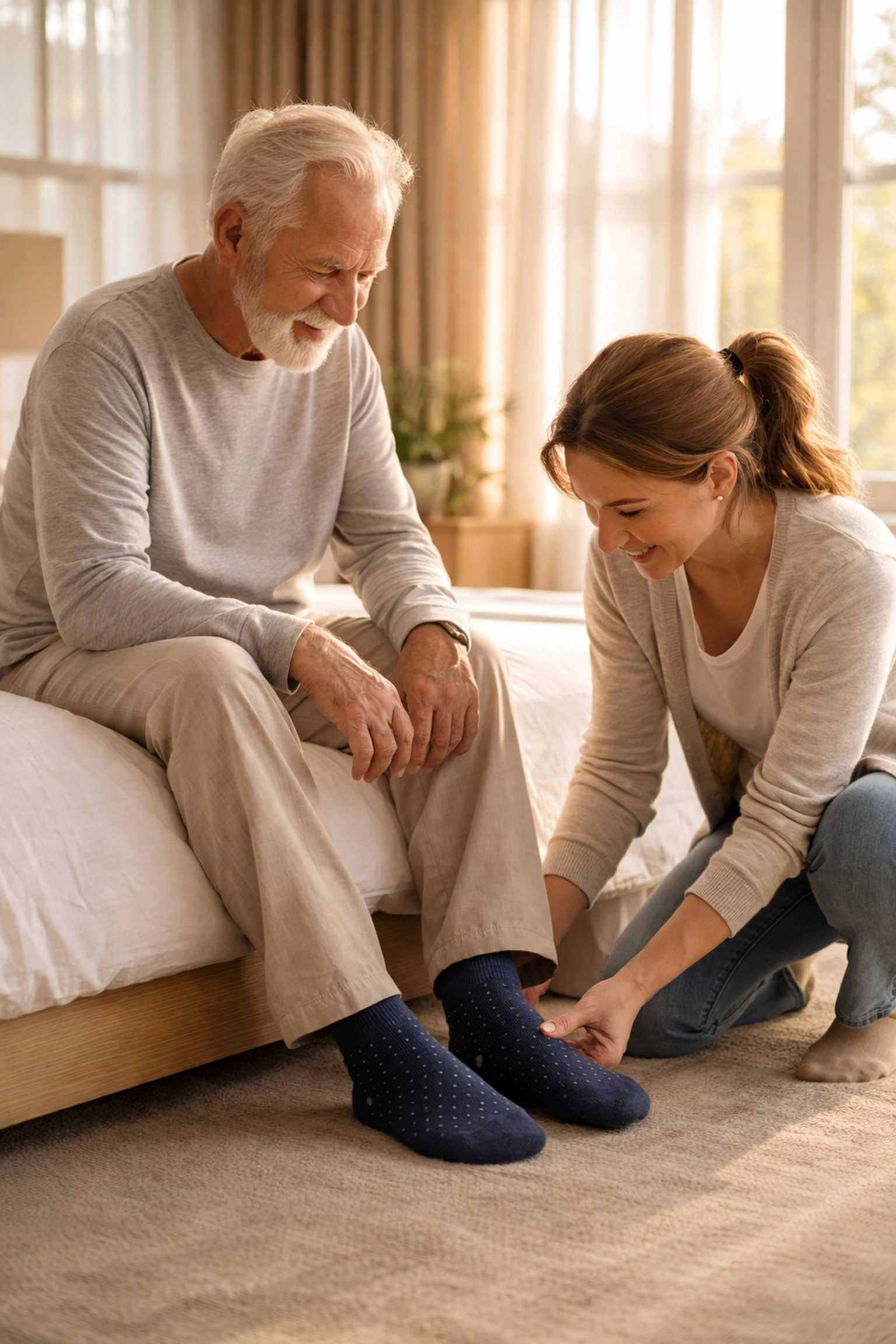
Even perfectly fitted socks don't stay perfectly positioned all day. Socks shift, slide, and twist during normal movement. When this happens, the grip patterns end up misaligned with the sole of the foot, reducing their effectiveness and potentially creating new slip hazards.
A sock that's twisted 45 degrees means the grips are now on the sides of the foot instead of the bottom: completely useless for preventing slips.
How to Fix It: Build sock checks into your daily routine. A quick glance to ensure socks are properly positioned takes just seconds but makes a real difference. If you're a caregiver, incorporate this into regular care activities. If your loved one lives independently, encourage them to adjust their socks whenever they feel them shifting.
Beyond Non-Slip Socks: A Comprehensive Approach
Non-slip socks are just one piece of the fall prevention puzzle. For truly effective protection, consider how they fit into a broader safety strategy:
-
Flooring matters: Even the best non-slip socks work better on appropriate flooring. Learn more about how to prevent falls in the kitchen and consider rubber flooring options for high-risk areas.
-
Support equipment: Grab bars, support poles, and rails provide crucial stability. Explore options like the Independence Pole for areas where extra support is needed.
-
Regular assessments: Fall risk changes over time. What works today may need adjustment in six months.
Moving Forward with Confidence
Non-slip socks can be a valuable tool in your fall prevention toolkit: but only when used correctly. By avoiding these seven common mistakes, you're already ahead of most families navigating elderly care.
Remember: the goal isn't just to prevent falls. It's to help your loved one maintain their independence, confidence, and quality of life. Sometimes that means non-slip socks. Sometimes it means alternatives. And always, it means paying attention to what actually works for the unique individual in your care.
When in doubt, don't hesitate to reach out to healthcare professionals who can provide personalized guidance based on your loved one's specific needs and circumstances. With the right approach, safer steps are absolutely within reach.
✔ Reviewed by Steve Kerr, PT
Steve Kerr, PT is the founder of Fall Prevention Foundation and a licensed physical therapist with more than 30 years of experience helping older adults improve mobility, reduce fall risks, and remain safely independent at home.
Our educational articles are reviewed for accuracy and are intended to support older adults, caregivers, families, and healthcare professionals.
Learn more about Steve Kerr and the Fall Prevention Foundation →

