


Every year, millions of older adults experience falls: and many of these incidents happen right at home. The good news? There are simple, practical tools that can help you build the strength and stability needed to move through your day with confidence. One of the most effective (and surprisingly fun) options is a balance board for seniors.
Whether you've heard of balance boards before or this is completely new territory, this guide will walk you through everything you need to know. We'll cover how these boards work, the different types available, and most importantly, how to use them safely in your own living room.
Let's dive in and explore how a senior balance board could become your new favorite tool for staying steady on your feet.
What Exactly Is a Balance Board?
A balance board is a simple piece of fitness equipment designed to challenge your stability. It typically consists of a flat platform that sits on top of an unstable base: like a rounded bottom, a cylinder, or a half-sphere. When you stand on it, your body has to constantly make small adjustments to stay upright.
Think of it like standing on a gently rocking boat. Your muscles activate, your core engages, and your brain works overtime to keep you balanced. This combination of physical and mental engagement is what makes balance boards so effective for building stability.

The beauty of a balance board is its simplicity. It doesn't require batteries, complicated setup, or a trip to the gym. You can use it right in your living room while watching your favorite show: making it easy to stay consistent with your balance training.
Why Balance Training Matters as We Age
Here's something important to understand: balance isn't just about not falling. It's about moving through your life with confidence and independence.
As we get older, our proprioception: that's your body's sense of where it is in space: naturally starts to decline. This can make simple activities like getting up from a chair, walking on uneven surfaces, or reaching for something on a high shelf feel less secure than they used to.
Balance training directly addresses this by:
- Strengthening key muscle groups in your legs, hips, and core
- Improving proprioception so your body responds faster to changes in position
- Boosting coordination for smoother, more controlled movements
- Building mental confidence so you feel safer during daily activities
Research shows that progressive balance exercises can significantly reduce fear of falling among older adults. And when you're not worried about falling, you're more likely to stay active: which creates a positive cycle of better health and greater independence.
Types of Balance Boards: Finding Your Perfect Match
Not all balance boards are created equal. Different designs offer different levels of challenge, so you can find one that matches your current fitness level and goals. Here are the main types you'll encounter:
Rocker Boards
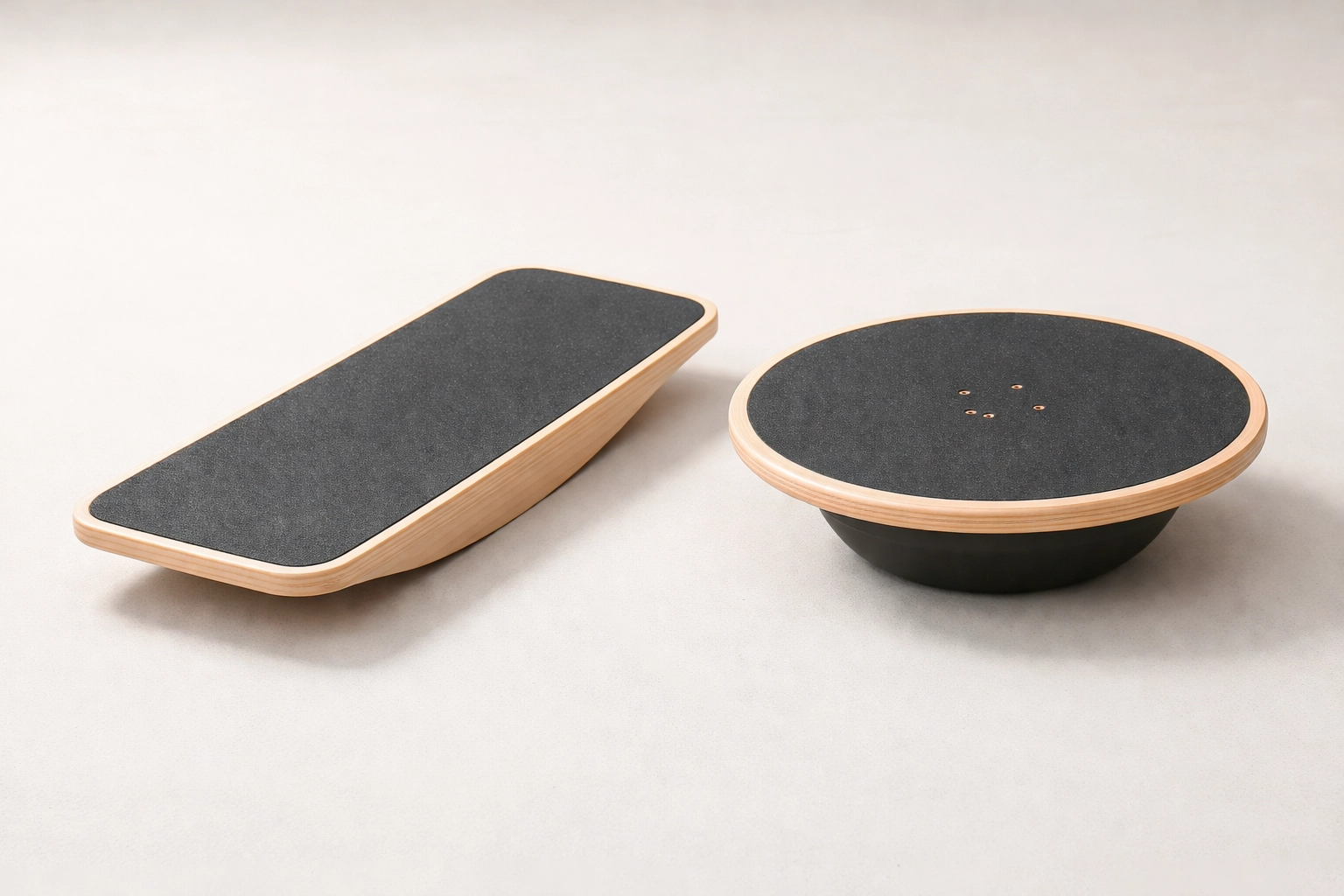
Rocker boards are often the best starting point for seniors new to balance training. They have a flat top with a curved bottom that allows the board to tilt side-to-side (or front-to-back, depending on how you position it). The movement is predictable and controlled, making it easier to build confidence.
Wobble Boards
Wobble boards sit on a rounded half-sphere base, allowing movement in all directions: forward, backward, and side-to-side. This 360-degree instability provides a greater challenge and engages more muscle groups. Many people graduate to wobble boards after mastering a rocker board.
Inflatable Balance Discs
These cushioned discs are another gentle option. You can stand on them or even sit on one while in a chair to work on core stability. They're lightweight, portable, and offer a softer surface that some find more comfortable.
When choosing a balance board for seniors, look for features like:
- A non-slip surface on top for secure footing
- Rubberized edges or a textured bottom to prevent the board from sliding on your floor
- A lower profile design for easier step-on and step-off
- Weight capacity that accommodates your needs
The Benefits Go Beyond Physical Stability
While the physical benefits of using a senior balance board are impressive, the advantages don't stop there. Balance and coordination exercises have been shown to support cognitive functions like memory and spatial awareness. When your brain has to process balance challenges, it's getting a workout too!
Many people also report improvements in:
- Posture – Standing tall becomes more natural when your core is engaged
- Joint health – Gentle movement can help maintain flexibility in ankles, knees, and hips
- Overall mood – Physical activity releases feel-good endorphins, and accomplishing balance goals builds self-esteem
It's a small investment of time: just a few minutes a day: that can pay dividends in how you feel and move.
Safety First: Tips for Getting Started
Before you hop on a balance board, let's talk about doing this safely. The whole point is to prevent falls, not create new risks!

Always Have Support Nearby
When you're first starting out, position yourself next to a sturdy support. This could be:
- A solid wall you can touch for stability
- A heavy piece of furniture like a countertop or sturdy table
- An Independence Pole or floor-to-ceiling grab bar designed for exactly this purpose
- A trusted family member or caregiver standing beside you
Having something to grab onto allows you to challenge yourself while maintaining a safety net.
Start Slow and Simple
Begin by simply standing on the board while holding onto your support. Get used to the feeling of the unstable surface beneath your feet. Once that feels comfortable, try:
- Letting go of support for a few seconds at a time
- Shifting your weight gently from side to side
- Gradually increasing the time you balance without holding on
There's no rush. Progress at whatever pace feels right for you.
Choose the Right Footwear
Wear supportive, non-slip shoes or go barefoot if you have good foot health. Avoid socks, which can be slippery, or shoes with thick, unstable soles.
Pick a Safe Location
Use your balance board on a flat, non-slip surface. Avoid carpet that might bunch up or hard floors where the board could slide. Some people place a yoga mat underneath for extra grip and cushioning.
Listen to Your Body
If you experience dizziness, pain, or significant fatigue, stop and rest. Balance training should feel challenging but not painful. If you have any health conditions that affect your balance, coordination, or cardiovascular system, it's wise to consult with a healthcare provider or physical therapist before beginning a new exercise routine.
Creating a Simple Balance Board Routine
Consistency is key when it comes to building balance and stability. The good news is you don't need lengthy workout sessions to see results. Research suggests that older adults benefit from balance and coordination programs conducted 2-3 sessions per week for at least 8 weeks.
Here's a simple routine to get you started:
Warm-Up (2 minutes)
- March in place gently
- Roll your ankles in circles
- Do a few gentle side-to-side weight shifts while standing on solid ground
Balance Board Practice (5-10 minutes)
- Stand on the board near your support
- Practice maintaining balance for 30-second intervals
- Try gentle rocking motions
- Rest between attempts as needed
Cool Down (2 minutes)
- Step off the board carefully
- Stretch your calves and thighs
- Take a few deep breaths

As you grow more confident, you can increase your time on the board, try new movements, or graduate to a more challenging board type.
You've Got This
Building better balance isn't about becoming a gymnast or performing impressive feats. It's about feeling secure when you stand up from your favorite chair. It's about walking through your home without worrying about every step. It's about maintaining the independence and confidence that allow you to live life on your own terms.
A balance board for seniors is one of the most accessible, affordable, and effective tools for achieving these goals. With just a few minutes of practice several times a week, you can strengthen the muscles that keep you steady and train your body to respond more quickly when you need it most.
If you're looking for more ways to create a safer home environment, explore our Safe Zones guide or browse our collection of mobility tools for fall prevention.
Remember, every small step you take toward better balance is a step toward a more confident, independent future. You've got this!
✔ Reviewed by Steve Kerr, PT
Steve Kerr, PT is the founder of Fall Prevention Foundation and a licensed physical therapist with more than 30 years of experience helping older adults improve mobility, reduce fall risks, and remain safely independent at home.
Our educational articles are reviewed for accuracy and are intended to support older adults, caregivers, families, and healthcare professionals.
Learn more about Steve Kerr and the Fall Prevention Foundation →

