


Falls prevention socks seem simple enough, right? You slip them on, the grippy treads do their job, and you're protected. But here's the thing: these handy safety tools only work when they're used correctly. And unfortunately, many people unknowingly make mistakes that can actually increase the risk of slipping rather than prevent it.
Whether you're caring for an aging parent, recovering from surgery, or simply want extra stability around the house, understanding how to properly use falls prevention socks can make all the difference. In this guide, we'll walk through the seven most common mistakes people make with grip socks: and more importantly, how to fix them so you or your loved one can move around safely and confidently.
Mistake #1: Choosing the Wrong Size
This is probably the most common mistake, and it's an easy one to make. Many people grab whatever size looks "close enough" without actually checking measurements. But ill-fitting falls prevention socks can create the very hazard they're designed to prevent.
Socks that are too loose can slip off during walking or bunch up under your foot, creating an unstable surface. On the flip side, socks that are too tight can cause discomfort, restrict circulation, and make you want to take them off: defeating the whole purpose.
How to Fix It
Always refer to the size chart provided by the manufacturer. Most hospital-style grip socks come in ranges like Small/Medium and Large/XL, typically based on shoe size. Take a moment to measure or check your usual shoe size before ordering. The socks should hug your feet with moderate snugness: secure enough to stay in place, but not so tight that they pinch or leave marks.
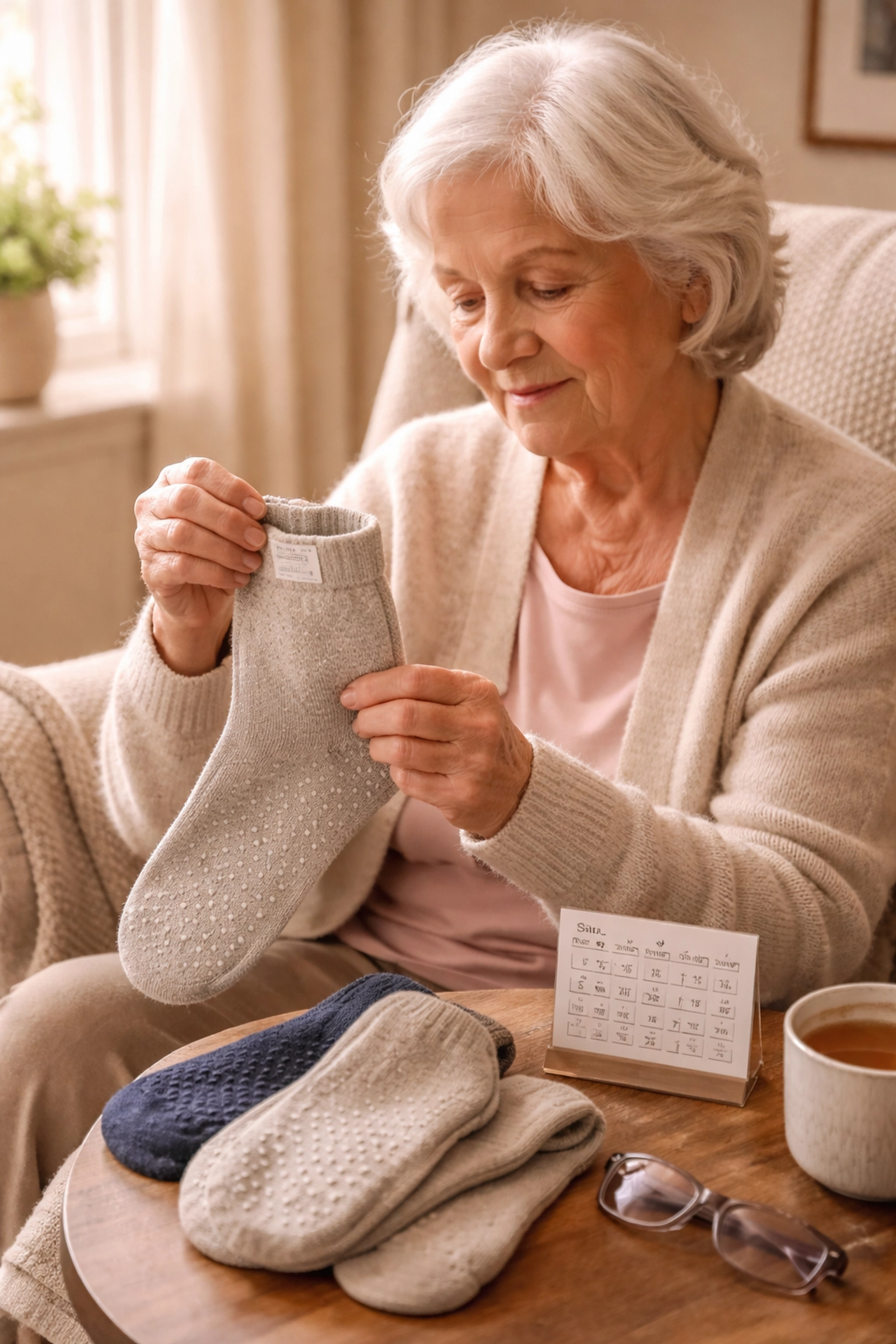
Mistake #2: Wearing Grip Socks Inside Shoes Without Checking the Fit
Here's a scenario that catches many people off guard: you put on your falls prevention socks, then slip on your regular shoes or orthotic footwear, and head out. Seems reasonable, but there's a hidden problem.
Falls prevention socks are often thicker than regular socks due to their rubber or silicone treads. When worn inside shoes: especially custom-made or orthotic shoes: they can bunch up significantly inside the footwear. This bunching creates increased pressure points that can lead to skin irritation, blisters, or even pressure sores over time.
How to Fix It
Be mindful when combining grip socks with shoes. If you notice any bunching, discomfort, or tightness, consider one of these alternatives:
- Wear your falls prevention socks without shoes when you're indoors on smooth surfaces
- Choose shoes with extra room to accommodate the thicker material
- Switch to regular socks when wearing shoes and save the grip socks for barefoot indoor use
The key is ensuring your footwear combination doesn't create new problems while trying to solve existing ones.
Mistake #3: Skipping Daily Foot Inspections
When you're in a routine of wearing grip socks every day, it's tempting to just keep them on without thinking twice. But this habit can mask important warning signs about foot health.
Feet need regular attention, especially for older adults or anyone with circulation concerns. Redness, irritation, dry skin, or early signs of pressure sores can go unnoticed when socks stay on around the clock.
How to Fix It
Make it a daily habit to remove falls prevention socks and give feet a thorough once-over. Look for:
- Redness or discoloration
- Dry, cracked skin
- Any signs of irritation or pressure marks
- Changes in skin texture or temperature
After inspection, ensure feet are clean and completely dry before putting on a fresh pair of socks. This simple routine takes just a few minutes but can catch potential issues before they become serious concerns.

Mistake #4: Using Falls Prevention Socks When They're Not Appropriate
Here's something that might surprise you: falls prevention socks aren't the right choice for everyone. While they work wonderfully for many people, certain neurological conditions can actually make grip socks less safe.
For individuals with peripheral neuropathy (reduced sensation in the feet), a shuffling gait, foot drop, or conditions like Parkinson's disease, the grippy treads on these socks can sometimes catch on flooring in unexpected ways. Instead of providing stability, the socks may cause the foot to stop suddenly while momentum carries the body forward.
How to Fix It
Before making falls prevention socks part of your daily routine, it's worth having a conversation with a healthcare provider. They can assess gait patterns, foot sensation, and overall mobility to determine whether grip socks are a good fit for your specific situation.
Falls prevention socks tend to be most effective for individuals with:
- Normal foot sensation
- A typical walking gait
- Good overall balance (with just a need for extra traction)
For those with complex mobility challenges, a healthcare professional might recommend alternative solutions better suited to individual needs.
Mistake #5: Ignoring Infection Control
This one often gets overlooked, but it matters more than you might think. Falls prevention socks that are worn throughout the day: walking on various floor surfaces: can pick up bacteria, dust, and other contaminants. If those same socks are then worn in bed, you're potentially transferring germs directly to your sheets and skin.
For anyone with compromised immunity, skin sensitivities, or wounds on their feet or legs, this can become a genuine health concern.
How to Fix It
Think of falls prevention socks like you would outdoor shoes: you wouldn't wear them in bed, right? Here are some practical infection control habits:
- Change to fresh socks after any significant activity or outing
- Never wear the same pair all day and then to bed
- Keep multiple pairs on hand so clean ones are always available
- Consider using slippers instead of grip socks when you're in bed and need to get up briefly
These small adjustments can make a meaningful difference in maintaining good hygiene and foot health.

Mistake #6: Wearing Falls Prevention Socks to Bed
Speaking of bedtime habits: this is a common one. Many people figure that if grip socks are good for daytime walking, they must be good for nighttime too. But falls prevention socks are specifically designed for ambulation (walking around), not for sleeping.
Wearing them overnight isn't just unnecessary; it can contribute to the hygiene issues mentioned above and may cause discomfort that disrupts sleep quality. Plus, the rubber treads can catch on bedding, making it harder to move naturally during sleep.
How to Fix It
Remove your falls prevention socks before getting into bed. If you're concerned about nighttime trips to the bathroom, keep a pair of comfortable slippers within easy reach at your bedside. This way, you can quickly slip them on when needed without sleeping in grip socks all night.
For those who frequently get up during the night, consider keeping a small nightlight on to illuminate the path to the bathroom. This, combined with readily available footwear, creates a safer nighttime routine.
Mistake #7: Not Checking the Grip Sole Condition
Falls prevention socks aren't meant to last forever. Over time, the rubber or silicone treads on the soles wear down from regular use. Once those grips become smooth or start peeling off, the socks lose their effectiveness: and you might not even realize it until a slip happens.
Additionally, if the sock fabric has stretched out or the sock tends to bunch and fold under your foot, it can actually create a slipping hazard rather than prevent one.
How to Fix It
Get in the habit of regularly inspecting your grip socks:
- Check that treads are intact, not worn smooth or peeling
- Ensure the sock lies flat on your foot with no bunching or rolling
- Look for stretched elastic or fabric that no longer fits snugly
- Replace socks at the first sign of significant wear
Think of it like checking tire treads on a car: worn-out grip means it's time for a replacement. Having a few backup pairs on hand ensures you're never stuck wearing socks that have lost their protective qualities.
Moving Forward with Confidence
Falls prevention socks are a simple, affordable tool that can genuinely help reduce slip-and-fall risks at home. But like any safety equipment, they work best when used correctly. By avoiding these seven common mistakes: and implementing the practical fixes we've outlined: you're setting yourself or your loved one up for greater safety and independence.
Remember, falls prevention is rarely about one single solution. It's about creating layers of protection throughout your environment and daily routines. Falls prevention socks are one valuable piece of that puzzle.
If you have questions about whether grip socks are right for your situation, or if you're looking for additional ways to make your home safer, don't hesitate to reach out to us or explore our other learning resources. Your safety and peace of mind matter: and small changes can lead to big improvements in quality of life.
✔ Reviewed by Steve Kerr, PT
Steve Kerr, PT is the founder of Fall Prevention Foundation and a licensed physical therapist with more than 30 years of experience helping older adults improve mobility, reduce fall risks, and remain safely independent at home.
Our educational articles are reviewed for accuracy and are intended to support older adults, caregivers, families, and healthcare professionals.
Learn more about Steve Kerr and the Fall Prevention Foundation →

