


When you’re looking to create a safer home environment, choosing the right non slip rug for elderly family members becomes a critical decision that can prevent devastating falls. With over 36 million falls among older adults each year resulting in more than 32,000 deaths, every safety measure matters. Non-slip rugs serve as your first line of defense against slips and falls, but only when you select the right features and materials.
The challenge lies in navigating the overwhelming number of options available while understanding what truly makes a rug safe versus what’s simply marketed as “non-slip.” This comprehensive guide will walk you through everything you need to know about selecting the best non slip rugs for elderly safety, including how they compare to rubber flooring alternatives.
Why Non-Slip Rugs Are Essential for Fall Prevention
Falls often happen in the most familiar places – your own home. Loose rugs and slippery surfaces account for a significant percentage of indoor falls among seniors. Traditional rugs can shift, bunch up, or create uneven surfaces that catch feet or mobility aids, leading to dangerous tumbles.
Non-slip rugs address these hazards by staying firmly in place while providing cushioning that can reduce impact if a fall does occur. They’re particularly crucial in high-traffic areas where seniors frequently walk, transition between rooms, or perform daily activities like cooking and bathing.
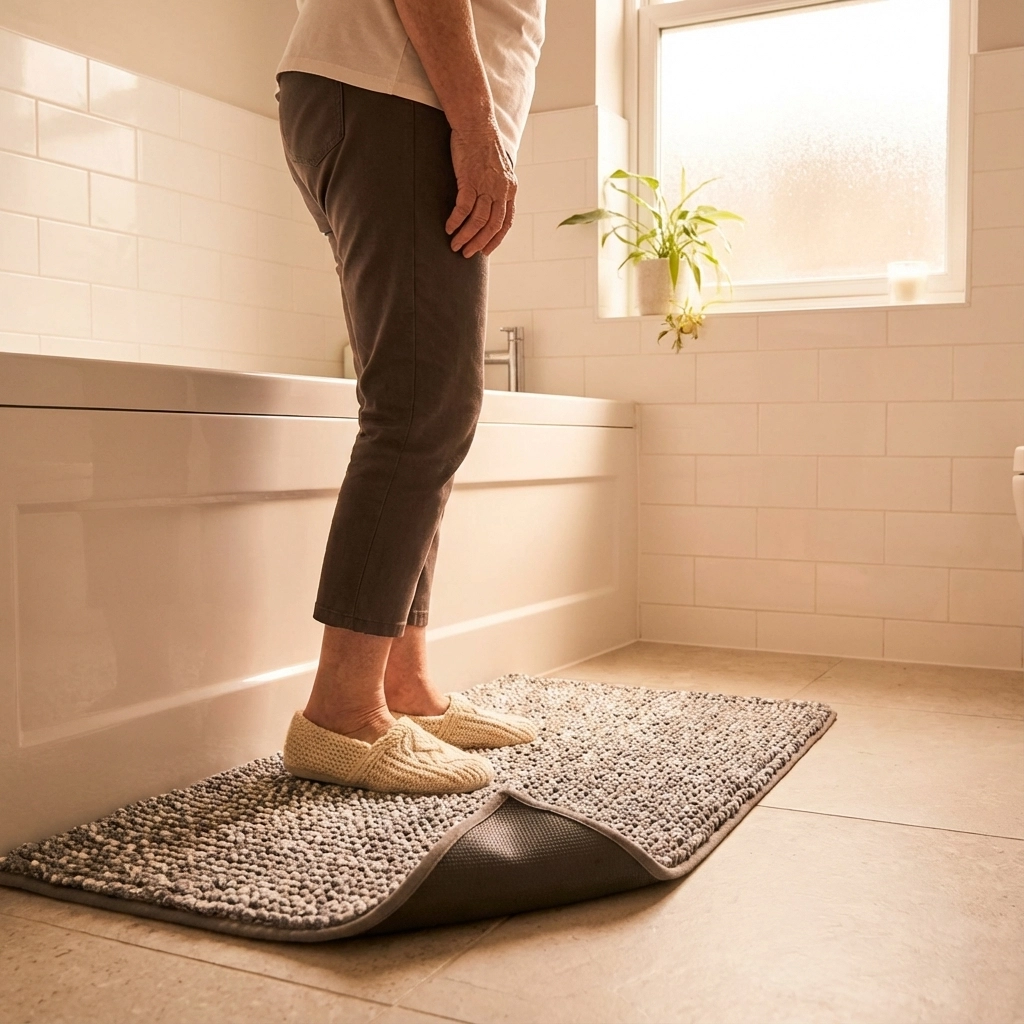
The key difference between regular rugs and safety-focused options lies in their design philosophy. While decorative rugs prioritize aesthetics, non-slip rugs for elderly individuals prioritize stability, visibility, and fall prevention without sacrificing comfort.
Key Features to Look for in Non-Slip Rugs
Low Profile Construction
Your ideal rug should have a thickness of no more than 1/4 inch. Low-pile or flat weave construction prevents tripping hazards while maintaining the rug’s stability. Thick, plush rugs might feel luxurious underfoot, but they create uneven surfaces that can catch walkers, canes, or shuffling feet.
Secure Edge Design
Beveled or tapered edges are non-negotiable features for elderly safety. These gradually sloped edges eliminate the sharp height difference between floor and rug that often causes trips. Some of the best non slip rugs for elderly users feature reinforced edges that lay completely flat against the floor.
High-Contrast Colors and Patterns
Visual clarity becomes increasingly important as eyesight changes with age. Choose rugs with high contrast between the rug color and your flooring. Avoid busy patterns that can create visual confusion or make it difficult to distinguish the rug’s boundaries.
Types of Non-Slip Backing and Materials
Rubber Backing
Natural rubber backing provides excellent grip on most flooring types, including hardwood, tile, and laminate. This material molds slightly to floor imperfections, creating a secure seal that prevents sliding. Look for full-coverage rubber backing rather than strips or dots for maximum stability.
Latex Backing
Synthetic latex offers similar grip properties to rubber but typically costs less. However, latex can break down over time, especially in humid environments, so inspect these rugs regularly for deterioration.

Gel Backing
Newer gel-based backing systems provide strong adhesion while being easier to reposition than rubber options. These work particularly well on smooth surfaces and don’t leave residue when moved.
Memory Foam with Non-Slip Bottom
For areas where seniors stand for extended periods, memory foam rugs with non-slip bottoms provide both comfort and safety. These work exceptionally well in kitchens and bathrooms where prolonged standing is common.
Best Placement Locations for Non-Slip Rugs
Bathrooms
Bathroom placement requires special attention to moisture resistance. Position non-slip rugs immediately outside shower and tub areas where water commonly drips. In bathrooms, consider pairing rugs with Independence Poles near the toilet or shower for additional support during transfers.
Kitchen Areas
Place rugs in front of the sink, stove, and refrigerator where seniors spend the most time standing. Kitchen rugs should have moisture-resistant properties and be easy to clean since spills are inevitable.
Bedroom Transitions
Position rugs beside the bed where seniors step when getting up during the night. This is another excellent location to combine rugs with Independence Rails for comprehensive safety during nighttime transfers.
Hallways and Entryways
Long hallway runners should have continuous non-slip backing to prevent shifting. Entryway rugs need to handle moisture from shoes while maintaining their grip properties.
Non-Slip Rugs vs. Rubber Flooring: A Comprehensive Comparison
Slip Resistance Performance
Rubber flooring provides superior slip resistance, especially when wet. The textured surface and material properties of rubber create friction that’s difficult to match with rugs. However, quality non-slip rugs with proper backing can provide adequate protection for most situations.
Installation and Flexibility
Non-slip rugs offer immediate installation and easy repositioning. You can change their location, replace them affordably, or remove them entirely without permanent changes to your home. Rubber flooring requires professional installation and represents a permanent modification.

Comfort and Cushioning
Both options provide cushioning, but the experience differs significantly. Rubber flooring offers consistent cushioning across the entire surface, while rugs provide targeted comfort in specific areas. For seniors with joint pain, the cushioning properties can significantly impact daily comfort.
Maintenance Requirements
Rubber flooring wins in the maintenance category. It’s waterproof, easy to mop, and doesn’t trap dirt or allergens. Non-slip rugs require regular vacuuming and occasional deep cleaning, and their backing can deteriorate over time.
Cost Considerations
Non-slip rugs offer a more budget-friendly entry point for improving home safety. Quality options range from $30-150 depending on size and features. Rubber flooring installation can cost $3-10 per square foot including materials and labor.
Aesthetic Integration
Rugs provide vastly more design options to complement existing décor. Rubber flooring, while available in various colors and patterns, offers limited aesthetic flexibility compared to the endless rug options available.
How to Test if a Rug Is Truly Non-Slip
The Push Test
Before relying on any rug, perform a thorough push test. With the rug in its intended location, use your foot to push firmly against one corner while holding the opposite corner. A quality non-slip rug shouldn’t move more than an inch.
The Walk Test
Walk normally across the rug while wearing typical indoor footwear. Pay attention to any shifting or movement, especially at the edges. Repeat this test wearing different types of shoes or slippers commonly worn in your home.
The Weight Test
If you use mobility aids, test the rug while using your walker, cane, or wheelchair. These devices often create different pressure points and movement patterns than regular walking.
Maintenance and Care Tips
Regular Inspection
Check your rugs monthly for signs of wear, particularly along edges and in high-traffic areas. Look for backing deterioration, loose threads, or areas where the rug no longer lies flat.
Proper Cleaning Methods
Vacuum regularly using appropriate settings for your rug’s pile height. For deep cleaning, check manufacturer instructions since some backing materials have specific care requirements. Never use harsh chemicals that could damage the non-slip properties.

Rotation and Repositioning
Rotate rugs periodically to ensure even wear patterns. If your rug starts showing permanent indentations or worn paths, consider repositioning it to extend its useful life.
When to Replace Non-Slip Rugs
Backing Deterioration
Replace rugs immediately when the backing begins cracking, peeling, or losing its grip properties. Deteriorated backing not only fails to prevent slipping but can create new tripping hazards.
Edge Wear
When edges start curling or fraying, replacement becomes necessary. Worn edges defeat the purpose of beveled design and can catch feet or mobility aids.
Loss of Stability
If your rug fails the push test or begins shifting during normal use, replacement is overdue. Don’t attempt to extend the life of a rug that no longer provides reliable safety benefits.
Strategic Implementation for Maximum Safety
The most effective approach often combines both non-slip rugs and other safety measures. Use rugs in living spaces where comfort and aesthetics matter, while considering rubber flooring for purely functional areas like laundry rooms or exercise spaces.
Remember that rugs work best as part of a comprehensive fall prevention strategy. Consider how they integrate with other safety measures you’ve already implemented, and don’t hesitate to consult with healthcare professionals about the most appropriate safety modifications for your specific situation.
By choosing the right non-slip rugs and maintaining them properly, you’re taking an important step toward creating a safer, more comfortable home environment that supports independence and peace of mind for years to come.
✔ Reviewed by Steve Kerr, PT
Steve Kerr, PT is the founder of Fall Prevention Foundation and a licensed physical therapist with more than 30 years of experience helping older adults improve mobility, reduce fall risks, and remain safely independent at home.
Our educational articles are reviewed for accuracy and are intended to support older adults, caregivers, families, and healthcare professionals.
Learn more about Steve Kerr and the Fall Prevention Foundation →

