


Every year, one in four adults over 65 experiences a fall, and around one-third of these incidents happen at home due to environmental hazards. Your floors—and the rugs you place on them—directly influence traction, balance, and injury severity if a fall happens. This guide helps you choose the best non slip rugs for elderly safety and pair them with supportive flooring so you can move confidently at home. Important note: The information below is educational and informational only. It is not medical advice, diagnosis, or treatment. For personalized guidance, consult a licensed healthcare professional or a qualified therapist who understands your mobility needs. Your home’s surfaces should work with you, not against you. Whether you’re refreshing one room or planning a step-by-step upgrade, the strategies outlined below will help you reduce fall risk while keeping the comfort and style you love. For a broader home safety plan, explore our organization’s Safe Zones approach and fall-prevention resources at the Fall Prevention Foundation website.
1) Why Flooring Choices Matter for Fall Prevention
Your flooring affects:
- Traction and grip underfoot (especially when wet or dusty)
- Stability when turning, stopping, and using mobility aids
- Impact absorption if a fall occurs
According to safety research, selecting appropriate flooring and rug combinations can meaningfully reduce fall-related injuries. Hard, glossy surfaces may look beautiful but offer little forgiveness; overly soft surfaces can make walkers and wheelchairs unstable. You’ll get the best results by balancing traction, stability, and comfort for your daily routines. 
2) Essential Characteristics of Fall-Safe Flooring
Keep these features top of mind as you evaluate flooring and rugs:
- Slip resistance and traction: Look for a high coefficient of friction (often 0.6 or higher is referenced for pedestrian safety) and textured finishes that still grip when slightly wet.
- Impact absorption without “sinking”: Safer floors compress under sudden impact but remain firm for everyday walking and mobility aids.
- Stable, even surfaces: Minimize flex and height variation that can catch toes, canes, or wheels.
- Easy maintenance: Dirt, moisture, and residue reduce traction. Choose surfaces that clean easily without specialty products that leave slick films.
3) Top Flooring Options That Pair Well with Non-Slip Rugs
Rubber Flooring: A High-Safety Choice
Rubber offers consistent traction—even when damp—plus shock absorption that can lessen impact forces. It’s durable, easy to clean, and available as interlocking tiles or rolls for smooth, low-edge installations.
Specialized Anti-Fall Flooring Systems
Some engineered systems are designed to reduce hip-impact energy substantially during a fall while remaining firm under normal use. Independent laboratory testing has shown meaningful reductions in hip and femur fracture risk compared to ordinary hard flooring.
Cork Flooring: Natural Cushion and Warmth
Cork’s honeycomb-like structure cushions under impact and provides inherent grip. It’s comfortable, helps with room warmth, and accepts durable sealants for easier cleaning. 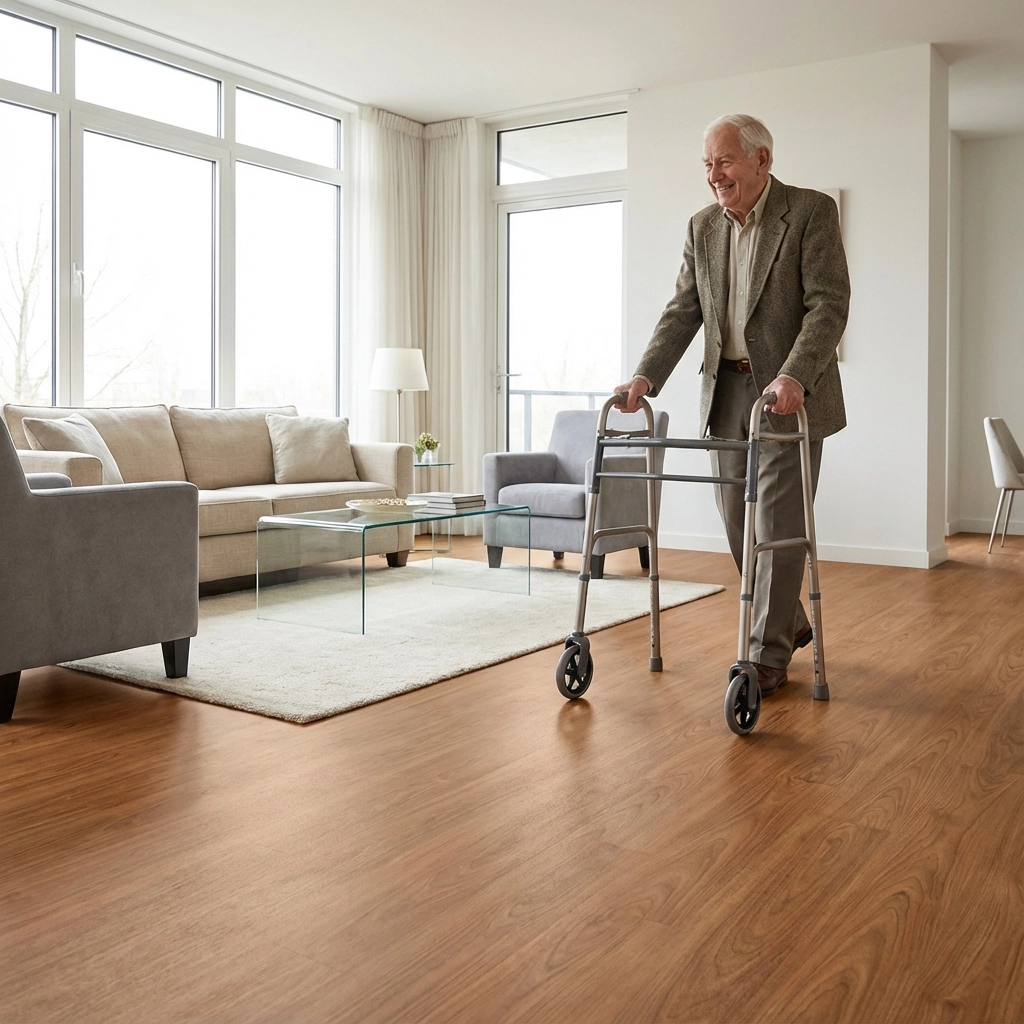
Luxury Vinyl Plank (LVP) with Cushioned Backing
Quality LVP with cushioned backing balances traction, appearance, and moderate impact protection. Look for textured wear layers and consider compatible underlayments to enhance comfort without sacrificing stability.
Engineered Wood with Safety Finishes
If you prefer a wood look, engineered products can be finished with anti-slip treatments. Wider planks reduce seams and transition lines that can catch toes, while professional installation helps keep surfaces level.
4) Flooring Types to Reconsider
- High-gloss hard surfaces (polished tile, marble, high-gloss wood) that become slick with moisture or dust
- Deep-pile carpeting that catches wheels, canes, and toes
- Loose-laid materials that shift underfoot or develop raised seams
5) Non-Slip Rug for Elderly: What “Non-Slip” Really Means
Area rugs can add traction and cushioning on hard surfaces—if they stay put. The best non slip rugs for elderly safety combine low profiles, secure backing, and smart sizing so you don’t end up stepping half on/half off an unstable surface. Key features to prioritize:
- Low-profile construction (about 1/4 inch or less) to limit trip edges
- Beveled or tapered edges for smooth transitions
- Full-coverage, professional-grade backing (rubber or high-quality TPR/latex blends) that maintains grip after repeated cleaning
- Sufficient size so your typical steps land fully on the rug, not half off the edge
- Easy-clean materials that don’t get slick with detergent residue
Pro tip: Pair rugs with high-quality, non-slip rug pads sized to the rug (trim if needed). Felt + natural rubber pads often combine stability with gentle floor protection.
6) Best Non Slip Rugs for Elderly: Room-by-Room Recommendations
Living Room
- Choose a large rug that extends at least 18 inches beyond the front legs of sofas/chairs to stabilize sit-to-stand transitions.
- Anchor with furniture legs to prevent shifting.
- Subtle, low-contrast patterns can reduce visual “busy-ness” and help with spatial orientation.
Kitchen and Dining
- Opt for quick-drying, waterproof-backed runners in front of the sink, stove, and prep zones.
- Consider light anti-fatigue cushioning for comfort during longer standing tasks—without adding excessive height.
- Verify clearance for appliance doors and chair legs.
Bathroom and Entry
- Select fast-drying, machine-washable mats with full-coverage backing.
- In entries, use multi-stage matting (scrape, dry, finish) to reduce tracked-in moisture and grit that can cause slips.

7) Non-Slip Rug Buyer’s Checklist
Before you buy, confirm:
- Traction: Does the backing grip your specific floor type when dry and slightly damp?
- Profile: Is the pile ≤ 1/4 inch with beveled edges?
- Size: Does it fully cover your stepping zones so you aren’t landing on edges?
- Pad: Will a felt + natural rubber or all-rubber pad add stability without raising edges?
- Cleanability: Can you maintain it without leaving residue that reduces grip?
- Compatibility: Some rubber or PVC backings can interact with certain floor finishes; test a small area first.
8) How to Install and Test a Non-Slip Rug So It Stays Put
Follow this simple, step-by-step process:
- Clean and dry the floor thoroughly (no waxy residues).
- Place a high-quality rug pad sized just smaller than the rug perimeter.
- Lay the rug flat; smooth out bubbles and ensure edges sit flush.
- Anchor corners with furniture where appropriate or use low-profile corner grippers designed for your floor type.
- Walk test with your usual footwear and mobility aids:
- Approach from multiple directions
- Step deliberately on edges
- Turn, stop, and back up
- Re-test after the first cleaning to confirm grip is unchanged.
If any corner lifts or slides, reassess pad quality, trim size, or add edge grippers designed for your floor.
9) Strategic Rug Placement for Maximum Safety
Target your highest-risk zones first:
- Hallways and connectors between frequently used rooms
- Sit-to-stand areas (beside beds, favorite chairs)
- Wet-prone areas (entries, kitchens, bathrooms)
Placement tips:
- Maintain consistent lighting so rug edges are easy to see.
- Minimize transitions: choose tapered edges or add low-profile transition strips.
- Use furniture to “anchor” larger rugs; for free-floating rugs, rely on premium pads that slightly exceed the rug edges for added stability.
10) Combining Flooring and Rugs for Layered Protection
When replacing floors isn’t practical, you can still boost safety with a layered approach:
- Add well-sized, non-slip rugs along your normal walking paths and at transfer zones.
- Use runners to bridge different flooring types and create predictable traction underfoot.
- Choose colors and patterns that provide subtle visual cues without overstimulation.

11) Installation and Maintenance That Preserve Safety
Professional installation considerations:
- Ask an experienced installer to assess subfloor levelness and moisture.
- Confirm transitions meet recommended height limits and are firmly secured.
- After install, perform a walk test through your typical traffic patterns.
Maintenance essentials:
- Clean rugs and floors as recommended by manufacturers; avoid products that leave slick residues.
- Inspect monthly for curled edges, worn backing, or shifting pads.
- Replace aging rugs and pads when grip decreases—even if the surface still looks good.
Note: Certain backings (rubber, PVC, TPR) can discolor or react with specific floor finishes over time. Test a small, inconspicuous area first or consult your flooring manufacturer.
12) Cost-Savvy Ways to Improve Safety Now
- Add premium rug pads under existing rugs for immediate traction and stability.
- Apply non-slip treatments to tile or other slick hard floors.
- Prioritize wet and high-traffic zones first, then phase upgrades room by room.
If you’re considering a larger flooring project, a professional can help you plan a sequence that delivers the most benefit early without disrupting daily life.
13) Frequently Asked Questions About Non-Slip Rugs and Flooring
Q: What is the best non slip rug for elderly safety? A: The best non slip rugs for elderly users typically feature a low profile (≈ 1/4 inch), beveled edges, and full-coverage rubber or high-quality TPR backing. Pairing the rug with a compatible, non-slip pad tailored to your floor type further reduces movement. Q: Do I still need a rug pad if the rug is labeled “non-slip”? A: In many cases, yes. A quality pad enhances grip, reduces bunching, and adds light cushioning without increasing edge height. Choose pads designed for your floor finish and trim to fit. Q: Are rubber-backed rugs safe on hardwood or vinyl? A: Many are, but some backings can react with certain finishes over time. Test a small spot first and follow your flooring manufacturer’s care guidance. Q: What size rug works best with walkers or wheelchairs? A: Larger, stable rugs that fully cover the primary pathway reduce edge encounters. Ensure enough room to turn and reposition mobility aids without catching edges. Q: Can I make hard floors safer without replacing them? A: Yes. Add properly sized non-slip rugs and runners at key zones, apply professional-grade non-slip treatments to slick surfaces, and keep floors clean and dry. Q: Is this guidance medical advice? A: No. This content is educational and informational only—not medical advice, diagnosis, or treatment. For personalized recommendations, consult your healthcare professional, physical therapist, or occupational therapist.
14) Next Steps: Build Your Safer Home, Your Way
You deserve to move confidently at home. By choosing the right flooring and dialing in a non slip rug for elderly safety in the rooms you use most, you create steadier steps, smoother transitions, and more independence day to day.
- Explore Safe Zones and fall-prevention solutions at the Fall Prevention Foundation: https://www.fallpreventionfoundation.org
- For a broader plan that complements your rug and flooring choices, read our comprehensive resource: Preventing Falls in Older Adults: A Comprehensive Guide to Safety and Independence
By staying informed and taking practical, home-focused steps, you can create safer surfaces without sacrificing comfort or style—and keep living life on your own terms.
✔ Reviewed by Steve Kerr, PT
Steve Kerr, PT is the founder of Fall Prevention Foundation and a licensed physical therapist with more than 30 years of experience helping older adults improve mobility, reduce fall risks, and remain safely independent at home.
Our educational articles are reviewed for accuracy and are intended to support older adults, caregivers, families, and healthcare professionals.
Learn more about Steve Kerr and the Fall Prevention Foundation →

